

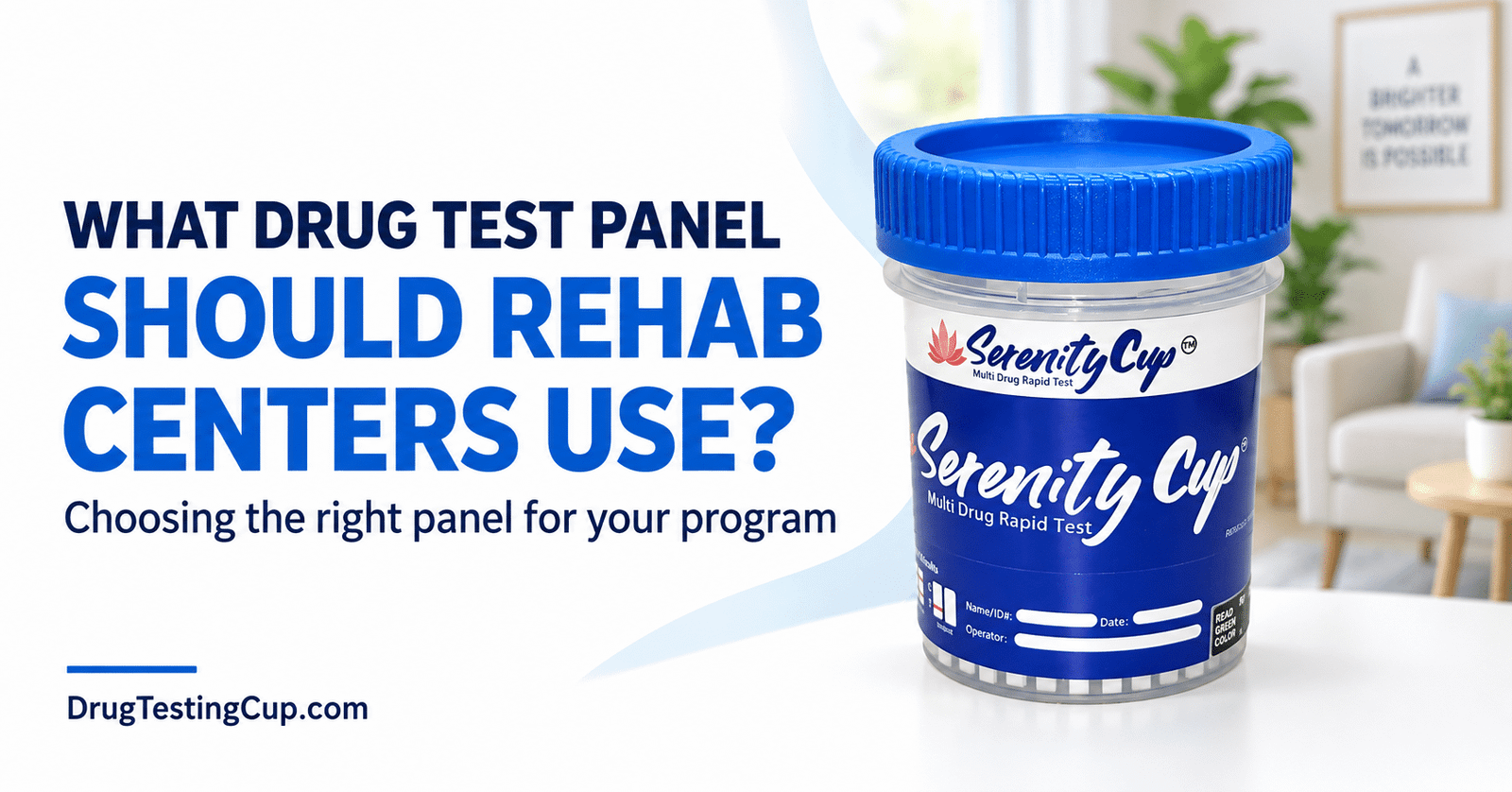

Drug test cups for rehab centers should be selected around the services the facility provides, the substances its clinical team needs to evaluate and the intended use of the exact device. A treatment center’s purchasing decision should support a defined care process, with clear instructions for collection, review and laboratory follow-up.
When evaluating drug test cups for rehab centers, it’s essential to consider their effectiveness in different testing scenarios.
There is no single panel count that answers every recovery program’s needs. A product described as a 10 panel, 12 panel or 18 panel cup may contain a different combination of assays from another product with the same number. The configuration must be reviewed as a complete specification.
For organizations comparing addiction recovery multi panel drug screens, this guide explains how to translate approved clinical requirements into a purchasing plan. It also covers the practical questions behind ordering substance abuse screening cups wholesale: documentation, stock rotation, staff preparation and the handling of product changes.
Define the purpose of testing before selecting drug test cups for rehab centers
Begin with the clinical team’s reason for testing. The purchasing department needs to understand which questions the approved testing process is intended to help address, without being responsible for making clinical decisions itself.
Understanding the role of drug test cups for rehab centers can significantly impact treatment outcomes.
An intake assessment, ongoing treatment review and a separate forensic monitoring contract may involve different procedures. Even when the same organization operates those services, the supply requirements should be identified separately.
ASAM’s drug-testing guidance recognizes that clinical testing in addiction care has no single universal standard covering every setting and purpose. Selection should therefore follow the relevant clinical assessment and program requirements. ASAM guidance on drug testing
Utilizing drug test cups for rehab centers aligns with best practices in substance abuse treatment.
Write down who approves the panel, who reviews results and which laboratory supports additional testing. That record gives purchasing staff a clear specification and gives collection staff a defined route for questions.
Review clinical intended use and exact product documentation
Confirm the specifications of drug test cups for rehab centers to ensure compliance with treatment protocols.
A treatment facility should verify that a device is appropriate for its intended clinical use before ordering it. The review should concern the exact configuration, not only the brand or a general catalog category.
Request the current instructions, full assay list, cutoffs and applicable regulatory documentation. If a particular CLIA classification is required for the facility’s testing arrangement, verify the status of the selected device and the requirements that apply to the site.
The CLIA-waived drug test cups category is a useful place to begin reviewing options. Individual products still require an exact documentation check.
Keep approved documents with the purchasing record. Staff should be able to identify which insert and configuration were reviewed when the item was selected. A later packaging change or substitute product should trigger a new check rather than inheriting the original approval automatically.
Documentation for drug test cups for rehab centers should be readily available for staff reference.
Translate clinical requirements into an assay checklist
A practical assay checklist connects the clinical request to the product information a supplier can provide. Use full target names alongside abbreviations so everyone involved is comparing the same requirements.
The checklist for assessing drug test cups for rehab centers should be thorough and comprehensive.
The checklist should include:
- The requested drug, drug class or metabolite.
- The required assay abbreviation, where specified.
- The screening cutoff and its units.
- The specimen type and testing method.
- Any additional specimen checks.Include all relevant parameters for drug test cups for rehab centers in your documentation.
- The laboratory pathway for questions the cup does not answer.
Separate required targets from items that are simply being considered. This helps a supplier identify whether a configuration meets the approved need or includes additional assays that still require review.
Ask the clinical lead to resolve any gap between the request and the proposed product. Purchasing staff should not assume that a broad drug-class assay covers every medication or substance the clinical team has in mind.
Compare panel counts without assuming identical coverage
Different configurations of drug test cups for rehab centers may serve specific needs.
Panel categories are useful for organizing a catalog, but the comparison should continue at the product level. Consider the following questions when reviewing different sizes of panel:
Evaluate how drug test cups for rehab centers support clinical decisions.
| Option under review | Question for the clinical team | Question for purchasing |
|---|---|---|
| 10 panel configuration | Does the exact target list support the approved testing purpose? | Are the configuration, cutoffs and intended use documented? |
| 12 panel configuration | Do its particular assays address an identified need? | Which targets differ from the current approved item? |
| Expanded configuration | Which additional targets are clinically relevant? | Is the exact expanded device suitable for the proposed clinical use? |
| Laboratory testing | Is a specific target or more detailed result needed? | What collection materials and service arrangements are required? |
Review 10 panel cups and 12 panel cups as collections of different configurations. Neither category should be treated as one standardized test.
A documented comparison is also useful when a facility changes suppliers. It shows whether the replacement preserves the approved panel or introduces differences that need clinical review.
Understand the limitations of the current 18 panel examples
The 18 panel cup collection includes specialty configurations discussed elsewhere on DrugTestingCup.com. The configurations covered here are Forensic Use Only products.
Understanding the use of drug test cups for rehab centers helps inform purchasing strategies.
That designation matters for a rehab-center purchasing decision. These cups should not be presented as ordinary clinical treatment devices simply because the organization works with substance-use concerns.
An organization operating a distinct, authorized forensic program may have separate purchasing requirements. Keep that review and its supplies clearly identified, and do not transfer assumptions from the forensic program into the clinical treatment setting.
The Forensic Use Only information page provides additional context. For a clinical request involving specialty substances, ask for an appropriately labeled testing option or coordinate the required laboratory service with the clinical team.
Plan how preliminary results will be reviewed
Strategies for reviewing results with drug test cups for rehab centers should be clearly defined.
A rapid immunoassay result is preliminary. Unexpected findings may need a more specific laboratory method, particularly when the result could affect patient care. The selected panel should therefore be considered alongside the facility’s review and follow-up process. ARUP guidance on drug testing
Create a clear handoff between the staff member performing the collection and the clinician responsible for interpretation. The record should identify the device, collection time and result according to the facility’s procedure.
Do not ask purchasing or administrative staff to interpret an unexpected result. Their role is to make the approved supplies and documentation available.
Before introducing a new cup, confirm that the laboratory can support the questions the clinical team expects to investigate. A convenient device does not remove the need for an appropriate follow-up arrangement.
Treat specimen checks as a separate purchasing feature
Some cups include pH, specific gravity or creatinine checks. If the clinical program requires additional specimen information, identify the exact parameters in the purchasing specification.
Assessing the features of drug test cups for rehab centers is crucial for effective testing.
Do not assume that every cup includes these checks or that a temperature strip supplies the same information. Record each feature separately.
The facility should also establish how staff document and refer an unexpected specimen-check result. A collection worker should have a defined process to follow rather than making an informal judgment.
The adulterants and specimen-check guide can support general education. The manufacturer’s instructions and the facility’s approved procedure should determine how the actual device is used.
Avoid purchasing additional features merely because they appear on a higher-priced product. Ask whether they address an identified need and whether staff have the procedure and training to use them appropriately.
Support consistent collection and respectful communication
Introduce the testing process with the wording approved by the clinical team. Patients should know who will review the result and whom they can ask about the procedure.
Communicating the process behind drug test cups for rehab centers fosters trust with patients.
Prepare a collection area with the required supplies and a clear system for identifying specimens. Keep instructions available to staff without displaying patient information.
Training should include the selected device’s collection requirements, timing, control indicators and invalid-result instructions. A generic poster can provide a reminder, but it should not substitute for the current manufacturer’s instructions.
The guide to reading a drug test cup can be used as supporting education. Staff should understand which parts apply to their approved product and where to find the full procedure.
Build a wholesale order around realistic consumption
Buying substance abuse screening cups wholesale requires an estimate of how many approved devices the facility will actually use. Base the estimate on the clinical team’s established testing practices and recent consumption records.
Separate planned consumption from training stock and any operational reserve. Avoid setting a testing schedule merely to justify a bulk order or use up inventory.
Consider the expected usage of drug test cups for rehab centers when placing orders.
For a hypothetical facility expecting 180 approved collections over a purchasing period, an order can be planned around those 180 devices plus the reserve the facility has chosen. The quantity should also account for the expiration dates available from the supplier.
Ask whether deliveries can be scheduled to match consumption. A lower unit price may be less useful if a large shipment exceeds storage capacity or is unlikely to be used before expiration.
Keep different programs and configurations identifiable
Organizations with residential, outpatient and other services may use several approved testing arrangements. Inventory records should show which item belongs to which service.
Use exact SKUs on shelf labels, purchase orders and receiving records. Two cups with similar packaging can still contain different assays or specimen checks.
If supplies are transferred between locations, record the item and quantity transferred. This keeps the central stock count meaningful and helps the receiving location identify the configuration.
Tracking drug test cups for rehab centers ensures proper inventory management.
Assign responsibility for removing expired or damaged items from usable stock. Store devices according to their supplied instructions and keep lot details available when the facility needs to investigate a product question.
Evaluate suppliers beyond the listed unit price
Ask suppliers for the documentation and operational information the facility needs to maintain its approved process. Relevant questions include current availability, package quantities, lot expiration, delivery options and how product changes are communicated.
Compare quotes against the same specification. A lower-priced alternative may differ in an assay, cutoff, device size or included accessory.
Documentation for drug test cups for rehab centers should be clear and accessible.
For recurring orders, agree on how substitutions will be handled. Require the facility’s approval before a different item is supplied under the same purchasing description.
A small initial order may help staff assess packaging, labeling and workflow fit before a larger procurement, where the facility’s purchasing policy allows it. That operational review does not establish clinical performance or replace the required product documentation.
Prepare the next purchasing request
A complete request should include the approved clinical-use requirement, assay and cutoff list, expected quantity, delivery location and current SKU if the facility is reordering.
Ensure the purchasing request for drug test cups for rehab centers is comprehensive and detailed.
Identify the clinical contact who can answer configuration questions and the purchasing contact who can coordinate delivery. Keeping those roles clear helps prevent administrative conversations from becoming unrecorded clinical decisions.
Use the bulk purchasing guide to organize commercial questions, then contact DrugTestingCup.com about rehab-center supplies with the approved specification. The discussion can then focus on documented options and reliable supply for the facility’s established process.
Frequently Asked Questions
What panel should a rehab center use?
Selecting the right drug test cups for rehab centers can significantly influence patient outcomes.
The clinical team should select testing that supports the patient and program requirements. No single panel count is appropriate for every rehab center, and the exact device must be suitable for its proposed clinical use.
Can the current Forensic Use Only 18 panel cups be used as routine clinical treatment tests?
They should not be presented or selected as ordinary clinical treatment devices. Review the exact intended-use labeling and obtain an appropriate clinical testing option or laboratory service.
Should a rehab center automatically buy the largest panel?
Not all drug test cups for rehab centers are equal; careful selection is essential.
No. Compare the required targets, cutoffs, intended use and follow-up process. Additional assays should address an identified need rather than replace an approved clinical specification.
What should a rehab center include in a wholesale supply request?
Provide the approved clinical-use requirement, complete assay and cutoff list, expected quantity, delivery details and current SKU if available. Identify a clinical contact for questions about the requested configuration.
IN THIS ARTICLE