

21 Panel Drug Test List: What a 21 Panel Drug Test Tests For

What does a 21 panel drug test test for? A 21 panel drug test screens one urine specimen for 21 drugs, metabolites or drug classes. It covers the standard 12-panel substances plus newer and specialty analytes such as fentanyl, xylazine, kratom, K2, ketamine and the alcohol metabolite EtG. Many 21 panel cups also include specimen-validity (ADLTX) checks.
There is no single 21 panel combination used by every manufacturer. Two cups with the same panel count can screen for different substances, so buyers should always compare the exact labels. You can review the configurations we carry in our 21 panel drug test cups category.
What Is a 21 Panel Drug Test?
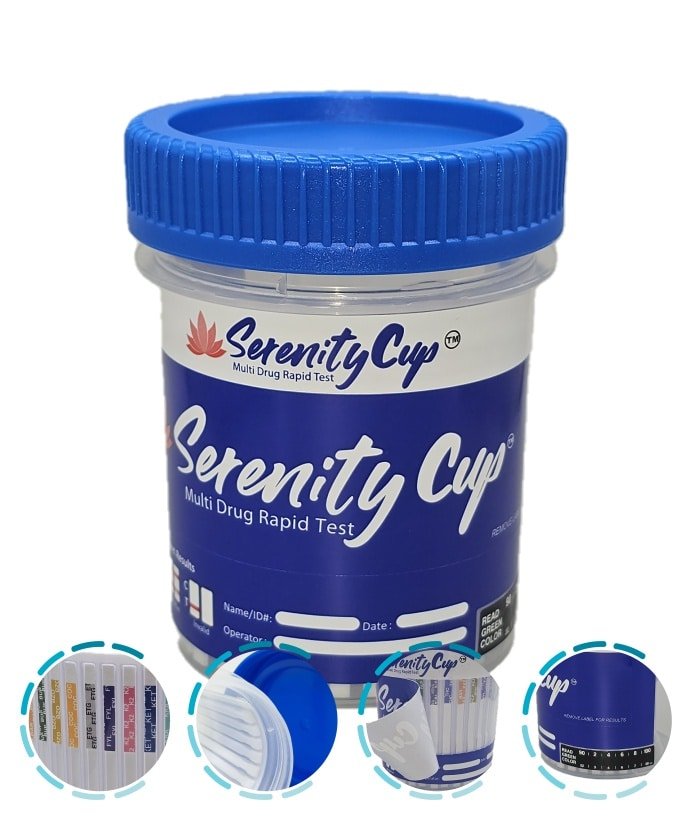
A 21 panel drug test is an expanded urine drug screen. Each “panel” is a separate immunoassay test strip calibrated to one drug or drug class at a set cutoff concentration. In a rapid test cup, all of the strips sit inside the cup, so a single specimen is screened against every panel at the same time and results are read in about five minutes.
Expanded panels exist because traditional 5- and 10-panel tests were designed around the drug supply of earlier decades. They do not include fentanyl, xylazine, kratom, synthetic cannabinoids or alcohol metabolites. Programs that monitor these substances would otherwise need to run several separate devices on the same specimen.
Rapid 21 panel cups are screening tools. A result that is not negative is considered preliminary until a certified laboratory confirms it with GC/MS or LC-MS/MS testing.
21 Panel Drug Test List
The table below shows a common 21 panel configuration — the one used in our 21 panel drug test cup with ZAZA. Cutoff levels are those printed for that device; other manufacturers may use different cutoffs.
| Panel Code | Drug or Drug Class | Cutoff | What the Panel Covers |
|---|---|---|---|
| AMP | Amphetamines | 1000 ng/mL | Amphetamine and some prescription stimulants |
| BAR | Barbiturates | 300 ng/mL | Older sedative-hypnotic medications |
| BUP | Buprenorphine | 10 ng/mL | Opioid treatment medication |
| BZO | Benzodiazepines | 300 ng/mL | Anti-anxiety and sedative medications |
| COC | Cocaine | 300 ng/mL | Cocaine metabolite (benzoylecgonine) |
| EtG | Ethyl Glucuronide | 300 ng/mL | Alcohol metabolite |
| FEN | Fentanyl | 20 ng/mL | Fentanyl, which standard opiate panels do not detect |
| K2 | Synthetic Cannabinoids | 50 ng/mL | K2/Spice-type compounds |
| KET | Ketamine | 1000 ng/mL | Dissociative anesthetic |
| KRA | Kratom | 500 ng/mL | Mitragynine-based plant products |
| MDMA | Ecstasy | 500 ng/mL | MDMA and related compounds |
| MET | Methamphetamine | 1000 ng/mL | Methamphetamine |
| MTD | Methadone | 300 ng/mL | Opioid treatment medication |
| OPI | Opiates | 300 ng/mL | Morphine, codeine and heroin metabolites |
| OXY | Oxycodone | 100 ng/mL | Oxycodone and oxymorphone |
| PCP | Phencyclidine | 25 ng/mL | Dissociative drug |
| PSY | Psilocybin | 500 ng/mL | Hallucinogen found in certain mushrooms |
| THC | Marijuana | 50 ng/mL | THC metabolite (THC-COOH) |
| TRA | Tramadol | 100 ng/mL | Synthetic opioid pain medication |
| XYL | Xylazine | 1000 ng/mL | Veterinary sedative found in the illicit supply |
| ZAZA | Tianeptine | 500 ng/mL | Unapproved opioid-like substance |
This configuration also includes three specimen-validity (ADLTX) checks: specific gravity, pH and creatinine. See our full reference on drug test cutoff levels for more on how cutoffs work.
Why 21 Panel Configurations Differ
The panel count tells you how many assays a device contains, not which ones. Manufacturers build expanded cups around the needs of different buyers, so the last several panels vary the most.
For example, two of our 21 panel cups share the same core of 20 drug panels. The 21 panel drug screen cup with PSY and XYL pairs those 20 drug panels with ADLTX validity checks. The ZAZA version keeps the same 20 panels and ADLTX checks and adds a tianeptine (ZAZA) panel. Our third configuration, the 21 panel drug test with DXM, gabapentin, LSD and 6-MAM, takes a different approach: it drops BAR, MDMA, KET and TRA, adds DXM, gabapentin, LSD and 6-MAM, and uses lower AMP, MET, COC and fentanyl cutoffs.
When comparing quotes, line up the panel abbreviations and cutoff levels side by side. A lower price is only a saving if the cup screens for the substances your program is required to monitor.
21 Panel vs 10 Panel and 12 Panel Drug Tests
The main difference is coverage. Smaller panels focus on long-established drug classes, while a 21 panel cup adds the substances that have appeared more often in recent years.
| Feature | 10 Panel | 12 Panel | 21 Panel |
|---|---|---|---|
| Standard drugs of abuse (AMP, COC, MET, OPI, THC and others) | Yes | Yes | Yes |
| Prescription opioids and sedatives (OXY, BUP, MTD, BZO) | Varies | Usually | Yes |
| Fentanyl (FEN) | Some configurations | Some configurations | Yes |
| Xylazine, kratom, K2, ketamine | No | Rarely | Yes |
| Alcohol metabolite (EtG) | Some configurations | Some configurations | Yes |
| Typical cost per cup | Lowest | Low | Higher |
If your program only needs the standard substances, a smaller panel is usually more economical. Our guide to what a 10 panel drug test tests for covers that option in detail.
Why Expanded Panels Now Include Fentanyl, Xylazine and Kratom
Standard opiate (OPI) panels are designed to detect morphine and codeine. They do not reliably detect fentanyl, which is why programs that need fentanyl screening use a dedicated FEN panel.
Xylazine is another reason expanded panels have grown. The CDC describes xylazine as a non-opioid veterinary sedative that is not approved for use in people and is increasingly found in the illegal drug supply. The CDC also cites DEA laboratory data showing that about 23% of fentanyl powder seized in 2022 contained xylazine. You can read the CDC overview, what to know about xylazine.
Kratom, tianeptine and synthetic cannabinoids are sold through channels that are harder to monitor than traditional drugs, and none of them appear on a standard 5- or 10-panel test. Adding these panels lets one specimen answer more questions for supervision and compliance programs.
Who Uses 21 Panel Drug Tests?
Expanded-panel rapid cups are most common in forensic and compliance settings, including:
- Probation and parole departments
- Drug courts and family courts
- Jails, prisons and other correctional facilities
- Pretrial services, diversion and community supervision programs
- Laboratories performing testing for these entities
Many 21 panel cups, including every configuration we carry, are designated Forensic Use Only. That means they are intended for these forensic settings rather than clinical diagnosis and are not CLIA waived or FDA cleared. Clinics and other healthcare buyers should review our guide to CLIA-waived drug test cups.
A 21 panel rapid cup is also not a substitute for DOT testing. Drug tests under Department of Transportation rules must be performed by a certified laboratory. Our comparison of DOT vs non-DOT drug testing explains the difference.
How to Read a 21 Panel Drug Test Cup
Each panel shows a control (C) line and a test (T) line. The control line confirms that the strip ran correctly.
- Negative: A C line plus any visible T line, even a faint one.
- Preliminary positive: A C line with no T line. The drug may be present at or above the cutoff.
- Invalid: No C line. Repeat the test with a new cup.
Read results at the time stated in the package insert, usually about five minutes, and do not interpret them after the stated window. For a step-by-step walkthrough, see how to read a drug test cup.
Specimen Validity Checks on 21 Panel Cups
A screening result is only as reliable as the specimen. Most 21 panel cups include a temperature strip, and many include ADLTX pads for specific gravity, pH and creatinine.
These checks help flag dilution, chemical additives or substituted specimens. An out-of-range validity result does not identify a drug. It tells the collector that the specimen may need to be recollected according to program policy.
How Long Can a 21 Panel Drug Test Detect Drugs?
Detection windows depend on the substance, the dose, how often it was used, the person’s metabolism and hydration. Most drugs are detectable in urine for roughly one to several days after use, while frequent THC use can extend detection considerably longer. Because these ranges vary, treat them as general guidance rather than a promise. Our guide to urine drug test detection windows covers each substance in more detail.
Choosing a 21 Panel Drug Test Cup for Your Program
Before ordering, confirm four things against your program requirements:
- Panel list: Make sure every substance you are required to monitor appears on the label, including specialty panels such as tianeptine.
- Cutoff levels: Match the cutoffs to your policy, especially for fentanyl, THC and buprenorphine.
- Intended use: Check whether the device is Forensic Use Only or CLIA waived and whether that fits your setting.
- Confirmation plan: Arrange laboratory confirmation for non-negative results before any final decision.
DrugTestingCup.com supplies 21 panel cups in single-cup and bulk quantities, with free shipping on orders of 100 cups or more. Compare all three configurations in our 21 panel drug test category, or visit our wholesale drug testing supplies page for volume pricing.
Frequently Asked Questions
What does a 21 panel drug screen test for?
It screens urine for 21 drugs or drug classes, usually the standard 12-panel substances plus fentanyl, EtG, K2, kratom, ketamine, tramadol, xylazine, psilocybin and, in some configurations, tianeptine. The exact list depends on the device.
Does a 21 panel drug test detect alcohol?
Only if it includes an EtG panel. EtG is an alcohol metabolite that can indicate recent drinking. All three 21 panel cups we carry include an EtG panel, at 300 or 500 ng/mL depending on the configuration.
Does a 21 panel drug test detect fentanyl?
Most 21 panel configurations include a dedicated fentanyl (FEN) panel. A standard opiate panel alone does not reliably detect fentanyl.
Is a 21 panel drug test used for employment or nursing school?
Employers and schools set their own panels, and most use smaller urine or laboratory panels. Rapid 21 panel cups labeled Forensic Use Only are intended for forensic programs rather than pre-employment screening, so ask the requesting organization which test it requires.
How accurate is a 21 panel drug test?
Rapid cups are immunoassay screening tests. They are designed to separate negative specimens from those needing further review, and any non-negative result should be confirmed by a certified laboratory using GC/MS or LC-MS/MS.
Is a 21 panel drug test CLIA waived?
Many 21 panel rapid cups are Forensic Use Only rather than CLIA waived. Check the intended-use designation on each product before purchasing for a clinical setting.
What is the difference between a 21 panel and a 22 panel drug test?
A 22 panel cup adds at least one more assay, often a newer substance such as nitazenes. Compare our 22 panel drug test cup if your program needs that additional coverage.