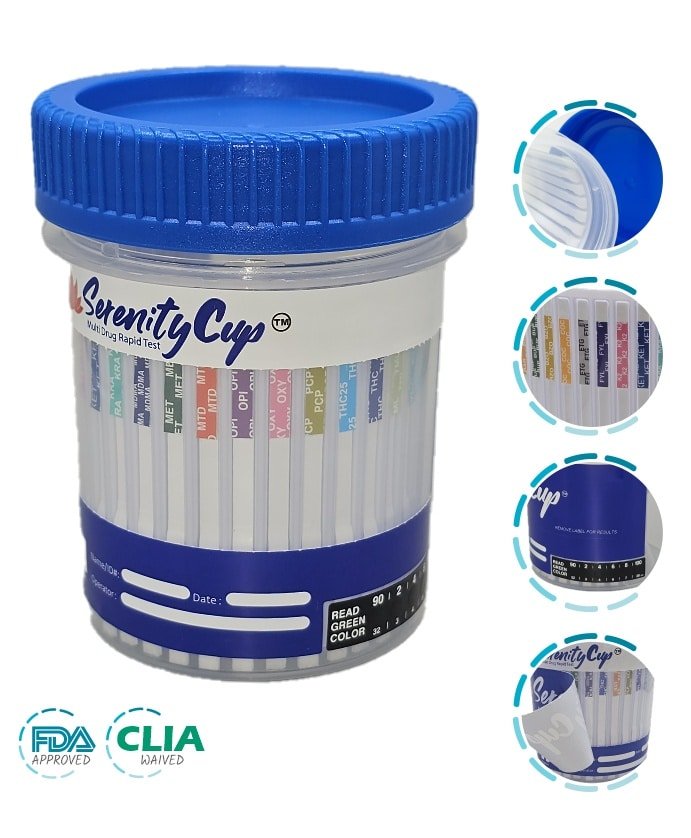
10 Panel vs 12 Panel Drug Test vs 14 Panel Drug Test Cups
Choosing the right drug test cup is one of the most important decisions for employers, clinics, and testing providers. The difference between a 10 panel, 12 panel, and 14 panel drug test cup directly impacts what substances you can detect—and how effective your drug testing program will be.
With workplace drug use trends evolving and substances like fentanyl and prescription drugs becoming more common, many organizations are moving beyond basic testing panels.
In this guide, we break down the key differences, drug detection capabilities, and best use cases for each panel so you can confidently choose the right option for your needs.
What Is a Multi-Panel Drug Test Cup?
A multi-panel drug test cup is a rapid urine screening device that detects multiple drugs at the same time. These cups provide:
Results in minutes
Easy, on-site testing
Integrated panels for multiple substances
Cost-effective screening for bulk buyers
The number of panels refers to how many drug categories the test can detect.
10 Panel Drug Test Cup
The 10 panel drug test cup is one of the most commonly used options in workplace drug testing.
Typical drugs included:
THC (Marijuana)
COC (Cocaine)
AMP (Amphetamines)
MET (Methamphetamine)
OPI (Opiates)
PCP
BZO (Benzodiazepines)
BAR (Barbiturates)
MTD (Methadone)
OXY (Oxycodone)
Best for:
Small to mid-sized businesses
Basic workplace drug testing programs
Pre-employment screening
Advantages:
Lower cost per test
Covers the most commonly abused drugs
Widely accepted standard
Limitations:
Does not include newer or synthetic drugs
May miss substances like buprenorphine or fentanyl
12 Panel Drug Test Cup
The 12 panel drug test cup expands on the 10 panel by adding two additional drug categories.
Additional drugs commonly included:
BUP (Buprenorphine)
TCA (Tricyclic Antidepressants) or MDMA (Ecstasy), depending on configuration
Best for:
Employers concerned about prescription drug abuse
Clinics and rehabilitation centers
Moderate-risk industries
Advantages:
Broader detection range
Better coverage of prescription medications
Improved workplace safety monitoring
Limitations:
Slightly higher cost than 10 panel
Still may not include fentanyl in standard configurations
14 Panel Drug Test Cup
The 14 panel drug test cup is a more advanced option designed for comprehensive drug screening.
Before purchasing drug test cups, consider the following:
1. Industry Requirements
Some industries require expanded drug panels due to safety risks.
2. Budget
Higher panel tests cost more but reduce the risk of missing drug use.
3. Drug Trends
Emerging drugs like fentanyl are influencing panel selection.
4. Testing Frequency
Bulk buyers should balance cost with coverage.
Why Many Employers Are Upgrading to 12 and 14 Panel Tests
Recent workplace drug testing trends show:
Increased polydrug use (multiple substances)
Growth in synthetic opioid use
Rising demand for expanded drug panels
As a result, many employers are moving beyond basic 10 panel tests to improve detection and workplace safety.
Recommendation
If you’re unsure which option to choose:
Start with a 10 panel for basic needs
Upgrade to 12 panel for better prescription coverage
Choose 14 panel for maximum protection and future-proof testing
For most employers in 2026, the 12 panel drug test cup offers the best balance between cost and coverage, while 14 panel tests are ideal for high-risk environments.
FAQ
Q: What is the difference between a 10 panel, 12 panel, and 14 panel drug test cup? A: The main difference is the number of drugs each test detects. A panel drug test 10 covers standard substances, a 12 panel adds more prescription drugs, and a 14 panel includes additional substances such as buprenorphine and often fentanyl for more comprehensive screening.
Q: Which drug test panel is best for employers? A: The best panel depends on your workplace risk level. A 10 panel is suitable for basic testing, a 12 panel is ideal for most employers, and a 14 panel is recommended for high-risk industries or workplaces concerned about opioids and synthetic drugs.
Q: Are 12 panel drug test cups more accurate than drug test 10 panel? A: Accuracy is similar across all panel types. The difference is not accuracy but the range of drugs detected. A 12 panel simply tests for more substances than a 10 panel.
Q: Do I need a 14 panel drug test cup for my business? A: You may need a 14 panel test if your workplace involves safety-sensitive roles, high liability, or increased risk of opioid or prescription drug misuse. It is commonly used in construction, transportation, and healthcare industries.
Q: What drugs are added in a 12 panel drug test compared to a 10 panel? A: A 12 panel test typically adds substances such as buprenorphine (BUP), MDMA (ecstasy), or tricyclic antidepressants (TCA), depending on the configuration.
Q: What additional drugs are included in a 14 panel drug test? A: A 14 panel drug test often includes fentanyl, buprenorphine, and additional synthetic or prescription drugs, offering broader detection than lower panel tests.
Q: Are drug test cups CLIA Waived? A: Many drug test cups are CLIA Waived, meaning they meet federal standards for simple and reliable testing. This allows them to be used in clinics and workplace settings without complex lab equipment.
Q: Can drug test cups detect fentanyl? A: Only certain expanded panels, such as many 14 panel configurations, include fentanyl. Standard 10 and most 12 panel tests do not include fentanyl unless specifically configured.
Q: How do I choose the right drug test panel for my company? A: Consider your industry, employee risk level, budget, and compliance requirements. Low-risk workplaces may use test 10 panel drug, while higher-risk environments benefit from 12 or 14 panel options.
Q: Are multi-panel drug test cups cost-effective for bulk buyers? A: Yes. Multi-panel drug test cups are designed for bulk purchasing and provide a lower cost per test compared to laboratory testing, especially for routine screening programs.
Q: What is the most commonly used drug test panel in the workplace? A: The 10 panel drug test remains one of the most commonly used options, but many employers are transitioning to 12 panel tests for broader coverage.
Q: Do drug test cups require lab confirmation? A: Yes. While drug test cups provide rapid screening results, any positive result should be confirmed by a certified laboratory using methods such as GC/MS for accuracy and compliance.
Q: How long does it take to get results from a drug test cup? A: Most drug test cups provide results within approximately five minutes, making them ideal for on-site workplace testing.
Q: Can drug test cups be used for random workplace testing? A: Yes. Drug test cups are commonly used for random testing because they are fast, easy to administer, and do not require laboratory processing for initial screening.
Q: What is the shelf life of drug test cups? A: Most drug test cups have a shelf life of 12 to 24 months when stored properly according to manufacturer guidelines.
Q: Are drug test cups easy to use? A: Yes. Drug test cups are designed for simple use with minimal training. They include built-in test strips and clear result indicators.
Q: What happens if an employee fails a drug test? A: Policies vary by employer, but a positive result typically leads to confirmation testing, followed by disciplinary action, suspension, or termination depending on company policy.
Q: Do all industries require the same drug test panels? A: No. Different industries have different requirements. For example, DOT-regulated industries use specific panels, while private employers can choose expanded panels based on their needs.
Q: Can drug test cups detect prescription drug abuse? A: Yes. Expanded panels such as 12 and 14 panel tests are designed to detect commonly abused prescription medications, including opioids and benzodiazepines.
Q: Why are more companies switching to higher panel drug tests? A: Employers are expanding panels due to rising concerns about prescription drug misuse, synthetic opioids, and workplace safety risks. Higher panel tests provide more comprehensive detection.