

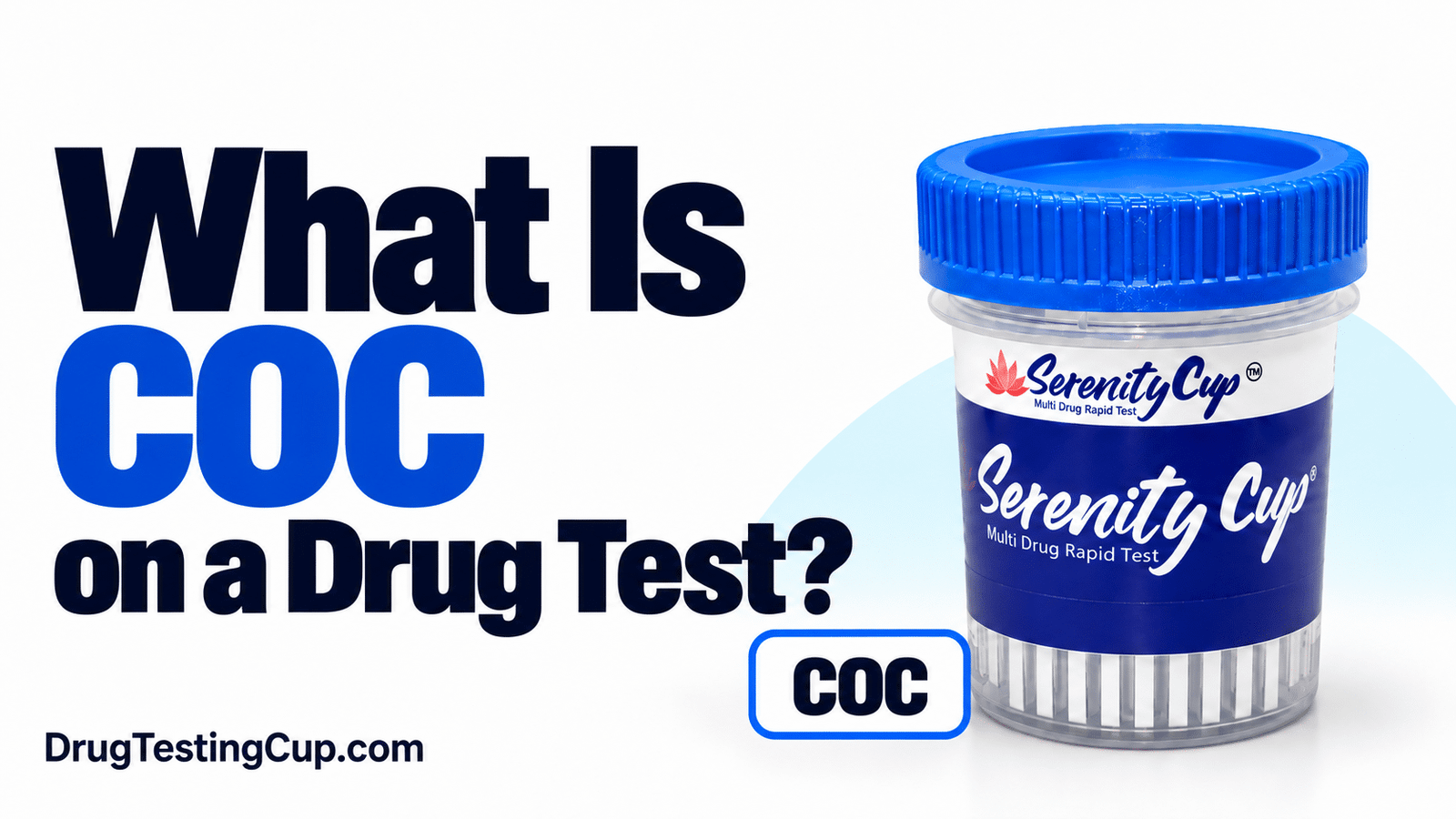

What is COC on a drug test? COC is the abbreviation for cocaine. On a drug test cup, dip card or lab report, the COC panel screens urine for benzoylecgonine, the main metabolite the body produces after cocaine use. Rapid tests usually print it as COC/300 or COC/150, the screening cutoff in ng/mL.
COC is one of the most specific panels on a standard drug test. It is part of almost every panel size, from basic 5-panel cups to 28-panel cups, and it is one of the five drug classes in federally regulated testing. This guide explains what COC detects, why two different cutoffs exist, what can and cannot cause a non-negative result, and how to read and confirm it.
What Is COC On A Drug Test?
COC stands for cocaine. The test does not look mainly for cocaine itself, which is broken down quickly. It looks for benzoylecgonine (BE), the metabolite that stays in urine longer and is the standard target for cocaine screening.
| Label | Meaning | Where you see it |
|---|---|---|
| COC/300 | Cocaine metabolite at 300 ng/mL | Most rapid cups and dip cards |
| COC/150 | Cocaine metabolite at 150 ng/mL | Tests aligned with the federal screening cutoff |
| BE / BZE | Benzoylecgonine | Laboratory reports |
For the other codes on the same device, see the drug test abbreviations chart.
COC/300 vs COC/150: Why the Cutoff Differs
The federal initial cutoff for the cocaine metabolite is 150 ng/mL, listed in 49 CFR §40.85. Many rapid tests were designed around the older 300 ng/mL level, and both remain common in non-DOT programs.
- COC/150 reacts to lower concentrations, so it can detect use for somewhat longer after the last dose.
- COC/300 is the most widely sold rapid cutoff and is used in many employer, clinic and treatment programs.
Neither number measures impairment. A cutoff is only the concentration at which a test switches from negative to non-negative. Our drug test cutoff levels guide explains how cutoffs work across all panels.
What Can Cause a Positive COC Result?
Because the COC panel targets benzoylecgonine, it is highly specific to cocaine. A true non-negative result almost always means cocaine entered the body. Sources include:
- Cocaine use in any form, including crack
- Medical cocaine, which is still used as a topical anesthetic in some nose and throat procedures
- Coca leaf products, such as coca tea, which contain cocaine
Common local anesthetics such as lidocaine and novocaine are chemically different and are not expected to produce a positive COC result. If a donor reports a recent medical procedure, document it and let laboratory confirmation and review sort it out.
How Long Does Cocaine Show Up on a Urine Test?
Benzoylecgonine is typically detectable in urine for a few days after use, and longer after heavy or repeated use. The window depends on the amount used, frequency, metabolism, hydration and the test’s cutoff, so COC/150 may detect use slightly longer than COC/300. The ARUP Consult detection windows table lists published estimates. No detection window is guaranteed.
For background on cocaine and its health effects, see the National Institute on Drug Abuse cocaine page.
Is COC Part of a DOT Drug Test?
Yes. Cocaine is one of the five drug classes in DOT testing, alongside marijuana, amphetamines, opioids and PCP. DOT tests must be collected and analyzed under 49 CFR Part 40 by certified laboratories. Rapid cups are not used for DOT-regulated testing, even when they include COC. They are used in non-DOT employer, clinical, court and treatment programs. Our DOT drug test guide covers the regulated process.
Which Tests Include a COC Panel?
| Format | Example |
|---|---|
| Single-panel dip card | Cocaine Drug Test Kit (COC/300) |
| Test strips | Cocaine Drug Test Strips (COC/300) |
| CLIA-waived cup with COC/150 | CLIA Waived 12 Panel Cup with Fentanyl 1 ng/mL |
| Basic panel guide | What is a 5 panel drug test |
Because COC is on nearly every multi-panel cup, the choice usually comes down to which other panels you need and whether your program prefers a 150 or 300 ng/mL cutoff.
How to Read a COC Result
- Negative: a control line and a test line next to COC, even if the test line is faint.
- Non-negative (preliminary positive): a control line and no test line next to COC.
- Invalid: no control line. Retest with a new device.
Read inside the time window in the package insert. Our guide to reading a drug test cup shows each pattern.
Confirming a Non-Negative COC Result
Even though the COC panel is specific, every rapid result is preliminary. Confirm non-negative results with a laboratory method such as GC-MS or LC-MS/MS, which measures benzoylecgonine directly, and follow your program’s review procedure before taking action.
Buying COC Drug Tests in Bulk
Most buyers get COC as part of a multi-panel cup. Request a bulk quote with the panels and cutoffs your program requires, or browse all urine drug test cups.
Frequently Asked Questions
What does COC mean on a drug test?
COC means cocaine. The panel screens urine for benzoylecgonine, the main metabolite of cocaine.
What is the difference between COC/300 and COC/150?
The number is the screening cutoff in ng/mL. COC/150 matches the federal initial cutoff and reacts to lower concentrations than COC/300.
Can lidocaine or novocaine cause a positive COC test?
They are not expected to. They are chemically different from cocaine, and the COC panel targets the cocaine metabolite benzoylecgonine.
How long does cocaine stay in urine?
Usually a few days after use, and longer after heavy or repeated use. Dose, frequency, metabolism and the cutoff all affect the window.
Is cocaine included in a DOT drug test?
Yes. Cocaine is one of the five DOT drug classes, but DOT tests are performed by certified laboratories, not with rapid cups.
Does a positive COC result need confirmation?
Yes. Rapid results are preliminary and should be confirmed with GC-MS or LC-MS/MS before any decision is made.
IN THIS ARTICLE