



Blog
Can Employers Test for Fentanyl? A Complete Employer Guide (2025 Update)


Fentanyl Drug Test Cups
- Multi-Panel Drug Test Cups with Fentanyl (FEN)
Examples include:- 12 panel
- 13 panel
- 14 panel
- 15 panel
These multi-panel cups detect fentanyl plus common drugs like THC, cocaine, opiates, oxycodone, amphetamines, PCP, buprenorphine, and more.
Fentanyl Test Strips
- CLIA Waived Fentanyl Test Strips — perfect for quick screening
Great for rehabilitation centers, sober living facilities, correctional facilities, and employers needing fast confirmation.
Does DOT Test for Fentanyl?
❌ DOT Currently Does NOT Test for Fentanyl
DOT’s standard drug test panel includes:
- Marijuana (THC)
- Cocaine
- Amphetamines
- Opiates (heroin, codeine, morphine)
- Phencyclidine (PCP)
Fentanyl is NOT included, but DOT has publicly stated they are evaluating adding synthetic opioids in future revisions.
For official DOT updates: https://www.transportation.gov/odapc
Fentanyl Detection Window
How long does fentanyl stay in the system?
| Test Type | Detection Window |
|---|---|
| Urine (most common) | 1–3 days |
| Blood | Up to 12 hours |
| Saliva | 1–2 days |
| Hair | Up to 90 days |
Repeated or heavy use may extend detection in urine up to 5–7 days.
Fentanyl Overdose
Fentanyl overdose has become a national crisis affecting workplaces across every industry. As one of the most potent synthetic opioids ever produced, fentanyl is 50–100 times stronger than morphine and capable of causing a fatal overdose in extremely small amounts. Because of its strength, availability, and presence in counterfeit pills, fentanyl has contributed to a dramatic rise in overdose deaths throughout the United States. Employers now face new challenges as fentanyl misuse increasingly impacts workplace safety, productivity, and employee well-being.
Fentanyl overdose occurs when the drug binds to the body’s opioid receptors at levels high enough to suppress vital functions—especially breathing. Unlike many substances that cause gradual impairment, fentanyl can cause severe respiratory depression within minutes. Overdose is often rapid, silent, and can become fatal before others notice symptoms. This is one reason employers are taking fentanyl testing more seriously and adding fentanyl panels to their workplace drug tests.
Why Fentanyl Is More Dangerous Than Other Opioids
One of the biggest dangers of fentanyl is its potency. A lethal dose is estimated to be only 2 milligrams, which is roughly equivalent to just a few grains of salt. This means even small amounts—accidental or intentional—can quickly overwhelm the body’s respiratory system.
Another risk is that fentanyl is often mixed into other drugs, such as:
-
Counterfeit oxycodone pills
-
Fake Xanax or benzodiazepines
-
Cocaine
-
Methamphetamine
-
Heroin
Many individuals overdose without realizing they consumed fentanyl at all. This contamination has become so widespread that fentanyl is now involved in the majority of opioid-related overdose deaths in the U.S., according to the CDC. (External: CDC overdose statistics)
For employers, this means that even employees who do not appear to be typical opioid users could unknowingly be exposed to fentanyl through counterfeit pills purchased on the street. This is a significant factor in post-accident drug testing and reasonable suspicion cases.
How Fentanyl Affects the Body During Overdose
During a fentanyl overdose, oxygen levels in the body rapidly decline due to slowed or stopped breathing. The brain becomes deprived of oxygen, causing loss of consciousness, brain damage, or cardiac arrest.
Key physiological effects include:
-
Severe respiratory depression
-
Extreme drowsiness or inability to wake up
-
Low blood pressure
-
Constricted pupils (“pinpoint pupils”)
-
Slowed or stopped heart rate
Because fentanyl crosses the blood-brain barrier faster than many other opioids, the onset of overdose symptoms can be shockingly quick. Without intervention, death can occur within minutes.
This speed of onset is a major concern in safety-sensitive jobs such as construction, transportation, logistics, and manufacturing—any role where impairment can lead to serious injury or fatalities.
Common Signs of Fentanyl Overdose
Employers and supervisors should be trained to recognize potential overdose symptoms. Common signs include:
-
Slowed or stopped breathing
-
Blue or gray lips and fingernails
-
Gurgling or choking sounds
-
Limp body
-
Loss of consciousness
-
Very small (pinpoint) pupils
-
Cold, clammy skin
Fentanyl overdose can resemble fainting or falling asleep, but it is far more dangerous. In workplaces where employees operate machinery, drive vehicles, or perform physical tasks, delayed response to an overdose can result in catastrophic accidents.
Naloxone (Narcan) and Fentanyl Overdose Reversal
Naloxone—commonly known as Narcan—is an opioid antagonist that can reverse fentanyl overdose by displacing opioid molecules from receptors in the brain. However, due to fentanyl’s potency, multiple doses of naloxone may be required.
Many businesses, especially in high-risk industries, now keep naloxone onsite and train supervisors on how to administer it. The CDC and SAMHSA encourage employers to consider naloxone availability as part of a workplace safety program.
(External: SAMHSA Naloxone Information)
However, naloxone is not a guarantee. Fentanyl overdoses may:
-
Require more than one dose
-
Recur if the fentanyl is long-lasting
-
Become fatal before help arrives
This reinforces why prevention through drug testing is more effective than relying on emergency reversal.
Why Fentanyl Overdose Is a Workplace Threat
Even if drug use occurs off-duty, fentanyl impairment can last long enough to affect work performance. Because fentanyl may remain in the system for hours after use, an employee could arrive at work impaired without appearing intoxicated. This impairment dramatically increases risks of:
-
On-the-job accidents
-
Machinery-related incidents
-
Driving collisions
-
Falls
-
Reduced coordination
-
Slowed reaction time
Businesses in construction, warehousing, logistics, manufacturing, healthcare, and corrections face the highest risks. Employers who fail to screen for fentanyl may unintentionally expose workers to avoidable hazards.
How Employers Can Reduce Fentanyl Overdose Risks
Employers can take proactive steps to reduce workplace fentanyl dangers:
1. Add Fentanyl to Drug Testing Panels
Most companies now use fentanyl-inclusive drug test cups, such as the 12 Panel, 13 Panel, 14 Panel, or 15 Panel tests available at drugtestingcup.com
Many of these options include FEN (fentanyl) detection as part of a comprehensive workplace screening solution.
2. Update the Workplace Drug Policy
Include fentanyl and synthetic opioids as specific substances that are prohibited and tested for.
3. Provide Overdose Awareness Training
Supervisors should know how to identify overdose symptoms and when to call emergency services.
4. Keep Naloxone Accessible
Especially for high-risk industries.
5. Educate Employees About Counterfeit Pills
Many workers overdose by accident due to fentanyl-laced pills purchased online or from unverified sources.
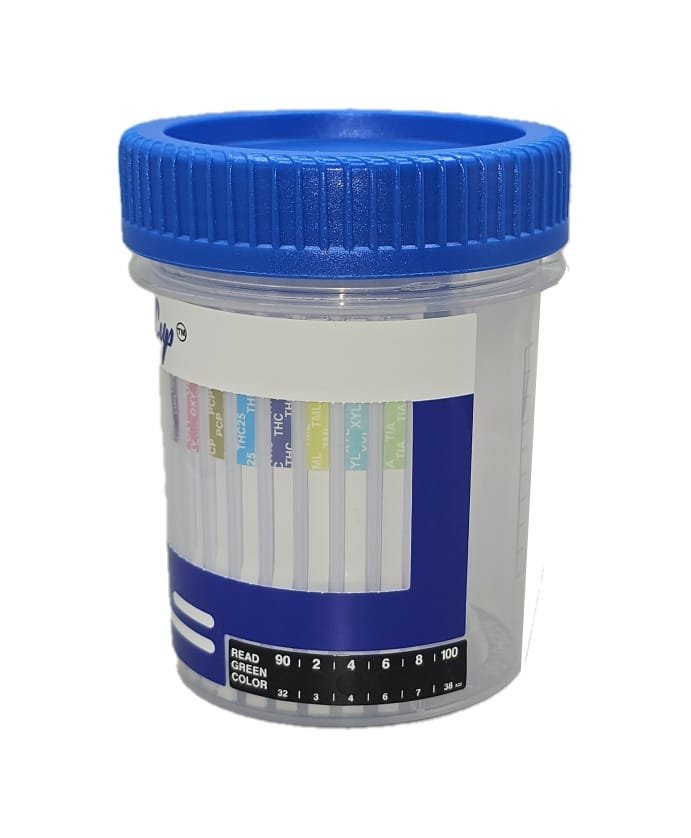
Yes — many modern 12-panel cups now include fentanyl (FEN).
DrugTestingCup.com offers several options:
- 12 Panel Drug Test Cup with Fentanyl
- 13 & 14 Panel Drug Test Cups with Fentanyl
- 15 Panel Drug Test Cup including fentanyl, tramadol, oxycodone, and more
Adding fentanyl gives employers a more complete risk assessment.
Why Fentanyl Testing Is Essential in 2025
1. Rising workplace opioid misuse
Fentanyl contamination in counterfeit pills (Percocet, Xanax, etc.) is increasing.
2. Employee safety and liability reduction
Accidents caused by impaired workers lead to lawsuits, OSHA penalties, and insurance premium spikes.
3. Affordable testing options are widely available
Fentanyl testing used to require lab analysis — now employers can use instant CLIA Waived cups for fast results.
How to Add Fentanyl to Your Workplace Drug Testing Policy
To remain compliant and clear:
-
- Update your written drug testing policy to state that fentanyl is included in the screening panel.
- Notify employees in advance.
- Use CLIA Waived testing supplies for employer-level compliance.
- Confirm any presumptive positive with a lab GC/MS test.
- Document your program for legal protection.
Yes — employers can and should test for fentanyl in the workplace.
It is legal, increasingly common, and one of the most important updates a business can make to its drug screening program.
Adding fentanyl to drug tests helps protect:
-
- employees
- customers
- company liability
- workplace safety
DrugTestingCup.com offers bulk pricing, volume discounts, and same-day shipping on CLIA Waived fentanyl tests for all industries.
FAQ – Can Employers Test for Fentanyl?
1. Do employers need special permission to test for fentanyl?
No. Fentanyl is a controlled substance, and employers may include it in any standard drug test panel.
2. Is fentanyl part of the DOT drug test?
No — DOT does not test for fentanyl, but employers may add a non-DOT supplemental panel that includes fentanyl.
3. What test detects fentanyl most accurately?
Urine drug test cups with FEN are the most common and reliable instant test.
4. Can a fentanyl addiction be detected with a regular opioid test?
No. Fentanyl requires a specific FEN marker and will not appear on a standard opiate screen.
5. How fast can employers receive results?
Instant test cups provide results in 5 minutes, with lab confirmation available for positive findings.
[/vc_column_text][/vc_column][/vc_row]
Fentanyl has become one of the most dangerous and widely misused drugs in the United States. With fentanyl-related overdoses continuing to rise, businesses—especially in safety-sensitive industries—are asking a critical question:Can Employers Test for Fentanyl?
Can Employers Test for Fentanyl
Can employers legally test for fentanyl during workplace drug screenings?
The short answer is yes. Employers can test for fentanyl as part of a standard drug screening program, and fentanyl testing is now one of the fastest-growing additions to both pre-employment and random drug test panels.
In this guide, we explain how fentanyl testing works, legal considerations, best practices, detection windows, and the most reliable fentanyl drug tests available for employers.
Can Employers Test for Fentanyl?
✔ Yes — Employers Can Test for Fentanyl Legally
Fentanyl is a Schedule II controlled substance under the Drug Enforcement Administration (DEA). Because it is a regulated opioid, employers can legally test for fentanyl during:
- Pre-employment drug tests
- Random drug testing
- Post-accident testing
- Reasonable suspicion testing
- Return-to-duty testing
There are no federal restrictions preventing businesses from adding fentanyl to their testing panel. In fact, more companies are adding fentanyl as standard due to increasing workplace risks.
Why Employers Should Test for Fentanyl
1. Fentanyl Is Not Detected on Standard 5-Panel Drug Tests
Many employers assume fentanyl shows up in a regular opioid screen — it does not.
Codeine, morphine, heroin, hydrocodone, and oxycodone are detected separately.
Fentanyl requires its own targeted test.
2. Fentanyl Overdose Is the #1 Cause of Workplace Drug-Related Deaths
According to the CDC, fentanyl is responsible for the majority of recent drug overdose fatalities. Businesses in healthcare, manufacturing, construction, logistics, and corrections are now increasing opioid screenings.
3. Protect Workplace Safety
Fentanyl impairment can cause:
- slowed reaction time
- dizziness
- confusion
- impaired coordination
- risk of serious accidents
Employers in safety-sensitive roles (DOT, transportation, machinery operation, security, and construction) face significant liability if they fail to test for high-risk substances.
How Employers Test for Fentanyl
Most Common Workplace Fentanyl Testing Methods
- Urine Drug Test Cups (most popular)
- Urine Test Strips / Dip Cards
- Laboratory GC/MS confirmation testing
- Oral saliva fentanyl tests (less common but emerging)
Best Fentanyl Drug Tests for Employers
You can find reliable, CLIA-Waived fentanyl test kits on DrugTestingCup.com:
Fentanyl Drug Test Cups
- Multi-Panel Drug Test Cups with Fentanyl (FEN)
Examples include:- 12 panel
- 13 panel
- 14 panel
- 15 panel
These multi-panel cups detect fentanyl plus common drugs like THC, cocaine, opiates, oxycodone, amphetamines, PCP, buprenorphine, and more.
Fentanyl Test Strips
- CLIA Waived Fentanyl Test Strips — perfect for quick screening
Great for rehabilitation centers, sober living facilities, correctional facilities, and employers needing fast confirmation.
Does DOT Test for Fentanyl?
❌ DOT Currently Does NOT Test for Fentanyl
DOT’s standard drug test panel includes:
- Marijuana (THC)
- Cocaine
- Amphetamines
- Opiates (heroin, codeine, morphine)
- Phencyclidine (PCP)
Fentanyl is NOT included, but DOT has publicly stated they are evaluating adding synthetic opioids in future revisions.
For official DOT updates: https://www.transportation.gov/odapc
Fentanyl Detection Window
How long does fentanyl stay in the system?
| Test Type | Detection Window |
|---|---|
| Urine (most common) | 1–3 days |
| Blood | Up to 12 hours |
| Saliva | 1–2 days |
| Hair | Up to 90 days |
Repeated or heavy use may extend detection in urine up to 5–7 days.
Fentanyl Overdose
Fentanyl overdose has become a national crisis affecting workplaces across every industry. As one of the most potent synthetic opioids ever produced, fentanyl is 50–100 times stronger than morphine and capable of causing a fatal overdose in extremely small amounts. Because of its strength, availability, and presence in counterfeit pills, fentanyl has contributed to a dramatic rise in overdose deaths throughout the United States. Employers now face new challenges as fentanyl misuse increasingly impacts workplace safety, productivity, and employee well-being.
Fentanyl overdose occurs when the drug binds to the body’s opioid receptors at levels high enough to suppress vital functions—especially breathing. Unlike many substances that cause gradual impairment, fentanyl can cause severe respiratory depression within minutes. Overdose is often rapid, silent, and can become fatal before others notice symptoms. This is one reason employers are taking fentanyl testing more seriously and adding fentanyl panels to their workplace drug tests.
Why Fentanyl Is More Dangerous Than Other Opioids
One of the biggest dangers of fentanyl is its potency. A lethal dose is estimated to be only 2 milligrams, which is roughly equivalent to just a few grains of salt. This means even small amounts—accidental or intentional—can quickly overwhelm the body’s respiratory system.
Another risk is that fentanyl is often mixed into other drugs, such as:
-
Counterfeit oxycodone pills
-
Fake Xanax or benzodiazepines
-
Cocaine
-
Methamphetamine
-
Heroin
Many individuals overdose without realizing they consumed fentanyl at all. This contamination has become so widespread that fentanyl is now involved in the majority of opioid-related overdose deaths in the U.S., according to the CDC. (External: CDC overdose statistics)
For employers, this means that even employees who do not appear to be typical opioid users could unknowingly be exposed to fentanyl through counterfeit pills purchased on the street. This is a significant factor in post-accident drug testing and reasonable suspicion cases.
How Fentanyl Affects the Body During Overdose
During a fentanyl overdose, oxygen levels in the body rapidly decline due to slowed or stopped breathing. The brain becomes deprived of oxygen, causing loss of consciousness, brain damage, or cardiac arrest.
Key physiological effects include:
-
Severe respiratory depression
-
Extreme drowsiness or inability to wake up
-
Low blood pressure
-
Constricted pupils (“pinpoint pupils”)
-
Slowed or stopped heart rate
Because fentanyl crosses the blood-brain barrier faster than many other opioids, the onset of overdose symptoms can be shockingly quick. Without intervention, death can occur within minutes.
This speed of onset is a major concern in safety-sensitive jobs such as construction, transportation, logistics, and manufacturing—any role where impairment can lead to serious injury or fatalities.
Common Signs of Fentanyl Overdose
Employers and supervisors should be trained to recognize potential overdose symptoms. Common signs include:
-
Slowed or stopped breathing
-
Blue or gray lips and fingernails
-
Gurgling or choking sounds
-
Limp body
-
Loss of consciousness
-
Very small (pinpoint) pupils
-
Cold, clammy skin
Fentanyl overdose can resemble fainting or falling asleep, but it is far more dangerous. In workplaces where employees operate machinery, drive vehicles, or perform physical tasks, delayed response to an overdose can result in catastrophic accidents.
Naloxone (Narcan) and Fentanyl Overdose Reversal
Naloxone—commonly known as Narcan—is an opioid antagonist that can reverse fentanyl overdose by displacing opioid molecules from receptors in the brain. However, due to fentanyl’s potency, multiple doses of naloxone may be required.
Many businesses, especially in high-risk industries, now keep naloxone onsite and train supervisors on how to administer it. The CDC and SAMHSA encourage employers to consider naloxone availability as part of a workplace safety program.
(External: SAMHSA Naloxone Information)
However, naloxone is not a guarantee. Fentanyl overdoses may:
-
Require more than one dose
-
Recur if the fentanyl is long-lasting
-
Become fatal before help arrives
This reinforces why prevention through drug testing is more effective than relying on emergency reversal.
Why Fentanyl Overdose Is a Workplace Threat
Even if drug use occurs off-duty, fentanyl impairment can last long enough to affect work performance. Because fentanyl may remain in the system for hours after use, an employee could arrive at work impaired without appearing intoxicated. This impairment dramatically increases risks of:
-
On-the-job accidents
-
Machinery-related incidents
-
Driving collisions
-
Falls
-
Reduced coordination
-
Slowed reaction time
Businesses in construction, warehousing, logistics, manufacturing, healthcare, and corrections face the highest risks. Employers who fail to screen for fentanyl may unintentionally expose workers to avoidable hazards.
How Employers Can Reduce Fentanyl Overdose Risks
Employers can take proactive steps to reduce workplace fentanyl dangers:
1. Add Fentanyl to Drug Testing Panels
Most companies now use fentanyl-inclusive drug test cups, such as the 12 Panel, 13 Panel, 14 Panel, or 15 Panel tests available at drugtestingcup.com
Many of these options include FEN (fentanyl) detection as part of a comprehensive workplace screening solution.
2. Update the Workplace Drug Policy
Include fentanyl and synthetic opioids as specific substances that are prohibited and tested for.
3. Provide Overdose Awareness Training
Supervisors should know how to identify overdose symptoms and when to call emergency services.
4. Keep Naloxone Accessible
Especially for high-risk industries.
5. Educate Employees About Counterfeit Pills
Many workers overdose by accident due to fentanyl-laced pills purchased online or from unverified sources.
Yes — many modern 12-panel cups now include fentanyl (FEN).
DrugTestingCup.com offers several options:
- 12 Panel Drug Test Cup with Fentanyl
- 13 & 14 Panel Drug Test Cups with Fentanyl
- 15 Panel Drug Test Cup including fentanyl, tramadol, oxycodone, and more
Adding fentanyl gives employers a more complete risk assessment.
Why Fentanyl Testing Is Essential in 2025
1. Rising workplace opioid misuse
Fentanyl contamination in counterfeit pills (Percocet, Xanax, etc.) is increasing.
2. Employee safety and liability reduction
Accidents caused by impaired workers lead to lawsuits, OSHA penalties, and insurance premium spikes.
3. Affordable testing options are widely available
Fentanyl testing used to require lab analysis — now employers can use instant CLIA Waived cups for fast results.
How to Add Fentanyl to Your Workplace Drug Testing Policy
To remain compliant and clear:
-
- Update your written drug testing policy to state that fentanyl is included in the screening panel.
- Notify employees in advance.
- Use CLIA Waived testing supplies for employer-level compliance.
- Confirm any presumptive positive with a lab GC/MS test.
- Document your program for legal protection.
Yes — employers can and should test for fentanyl in the workplace.
It is legal, increasingly common, and one of the most important updates a business can make to its drug screening program.
Adding fentanyl to drug tests helps protect:
-
- employees
- customers
- company liability
- workplace safety
DrugTestingCup.com offers bulk pricing, volume discounts, and same-day shipping on CLIA Waived fentanyl tests for all industries.
FAQ – Can Employers Test for Fentanyl?
1. Do employers need special permission to test for fentanyl?
No. Fentanyl is a controlled substance, and employers may include it in any standard drug test panel.
2. Is fentanyl part of the DOT drug test?
No — DOT does not test for fentanyl, but employers may add a non-DOT supplemental panel that includes fentanyl.
3. What test detects fentanyl most accurately?
Urine drug test cups with FEN are the most common and reliable instant test.
4. Can a fentanyl addiction be detected with a regular opioid test?
No. Fentanyl requires a specific FEN marker and will not appear on a standard opiate screen.
5. How fast can employers receive results?
Instant test cups provide results in 5 minutes, with lab confirmation available for positive findings.