DOT Drug Test Requirements: 5-Panel Drugs, Cutoffs & Rules for 2026
A DOT drug test is a federally regulated drug test required for certain employees who perform safety-sensitive transportation duties in the United States.
Unlike a general workplace drug screen, an official Department of Transportation drug test must follow 49 CFR Part 40, along with the rules of the applicable DOT agency.
The current DOT drug-testing program covers five drug classes:
- Marijuana metabolites
- Cocaine metabolites
- Amphetamines
- Opioids
- Phencyclidine (PCP)
Although this is commonly called a DOT 5-panel drug test, multiple individual drugs and metabolites are included within the amphetamine and opioid categories.
This guide explains what drugs are tested on a DOT drug test, DOT drug test cutoff levels, DOT testing requirements, 2026 regulatory changes, random testing rates, urine and oral-fluid rules, the difference between DOT and non-DOT testing, and what employers need to know about rapid drug test cups.
For official federal requirements, employers should always refer to the U.S. Department of Transportation’s 49 CFR Part 40 drug and alcohol testing regulations.
DOT Drug Test Quick Facts
| Question | Current DOT Rule |
|---|---|
| What is a DOT drug test? | A federally regulated drug test for covered safety-sensitive transportation employees |
| Is a DOT drug test a 5-panel test? | Yes, although several individual drugs are included within some of the five drug classes |
| What are the five DOT drug classes? | Marijuana, cocaine, amphetamines, opioids and PCP |
| What specimen is currently operational? | Urine |
| Is oral fluid allowed by the regulations? | Yes, but implementation requires at least two HHS-certified oral-fluid laboratories |
| Are DOT oral-fluid tests currently operational? | No; DOT currently lists no HHS-certified oral-fluid laboratories |
| Can an instant cup be used as the official DOT test? | No |
| Can a DOT specimen be tested for additional drugs? | No, except as specifically authorized under DOT regulations |
| Is fentanyl currently part of the DOT panel? | No; fentanyl and norfentanyl have been proposed but are not currently required |
| Does DOT test for alcohol? | Yes, through separate alcohol-testing procedures |
| What controls DOT testing procedures? | 49 CFR Part 40 plus applicable DOT agency regulations |
For a focused explanation of the current HHS federal panel, DOT fentanyl proposal and separate employer-authority testing, review our fentanyl workplace drug testing guide.
DOT expressly states that point-of-collection urine tests, point-of-collection oral-fluid tests, hair testing and instant drug tests are not authorized for official DOT drug testing.
What Is a DOT Drug Test?
A DOT drug test is a drug test performed under federal transportation regulations for employees who perform covered safety-sensitive functions.
The DOT program is not defined simply by the number of panels on a drug test.
An official DOT test involves regulated:
- Specimen collection
- Collector qualifications
- Chain of custody
- Federal documentation
- Laboratory testing
- Cutoff concentrations
- Confirmation procedures
- Medical Review Officer review
- Reporting
- Return-to-duty procedures when applicable
The Department of Transportation’s Office of Drug and Alcohol Policy and Compliance, commonly called ODAPC, administers 49 CFR Part 40 and provides official guidance concerning federally regulated transportation drug and alcohol testing.
Employers developing a broader workplace program can also review our Drug Testing Compliance & Regulation Guide for information about federal, state and industry-specific testing requirements.
DOT testing requirements arise under separate transportation regulations and should not be confused with the Drug-Free Workplace Act.
What Drugs Are on a DOT Drug Test?
One of the most common questions is:
What drugs are tested for in a DOT drug test?
Under current 49 CFR §40.82, laboratories conducting DOT drug tests must test for five drugs or drug classes:
- Marijuana metabolites
- Cocaine metabolites
- Amphetamines
- Opioids
- Phencyclidine (PCP)
DOT specimens cannot simply be expanded to include whatever additional drugs an employer wants to test.
What Does the DOT 5-Panel Drug Test Include?
| DOT Drug Class | Drugs / Metabolites Included |
|---|---|
| Marijuana | Marijuana metabolite / THCA |
| Cocaine | Benzoylecgonine |
| Amphetamines | Amphetamine, Methamphetamine, MDMA, MDA |
| Opioids | Codeine, Morphine, Hydrocodone, Hydromorphone, Oxycodone, Oxymorphone, 6-Acetylmorphine |
| Phencyclidine | PCP |
This means a DOT drug test covers five drug classes, but more than five individual analytes may be involved.
That distinction is important for employers comparing a federally regulated DOT test with an ordinary commercial 5-panel drug test.
For non-DOT workplace screening, organizations can compare our 5-panel drug test cups.
DOT Drug Test Cutoff Levels
DOT laboratories use federally established cutoff concentrations.
A cutoff level is the concentration used as a decision point for determining how a specimen proceeds through the laboratory testing process.
DOT establishes separate initial test cutoffs and confirmatory test cutoffs.
The official concentrations are published in 49 CFR §40.85.
DOT Urine Drug Test Cutoff Levels
| Initial Test Analyte | Initial Cutoff | Confirmation Analyte | Confirmation Cutoff |
|---|---|---|---|
| Marijuana metabolites / THCA | 50 ng/mL | THCA | 15 ng/mL |
| Cocaine metabolite / Benzoylecgonine | 150 ng/mL | Benzoylecgonine | 100 ng/mL |
| Codeine / Morphine | 2,000 ng/mL | Codeine | 2,000 ng/mL |
| Morphine | 2,000 ng/mL | ||
| Hydrocodone / Hydromorphone | 300 ng/mL | Hydrocodone | 100 ng/mL |
| Hydromorphone | 100 ng/mL | ||
| Oxycodone / Oxymorphone | 100 ng/mL | Oxycodone | 100 ng/mL |
| Oxymorphone | 100 ng/mL | ||
| 6-Acetylmorphine / 6-AM | 10 ng/mL | 6-Acetylmorphine | 10 ng/mL |
| PCP | 25 ng/mL | PCP | 25 ng/mL |
| Amphetamine / Methamphetamine | 500 ng/mL | Amphetamine | 250 ng/mL |
| Methamphetamine | 250 ng/mL | ||
| MDMA / MDA | 500 ng/mL | MDMA | 250 ng/mL |
| MDA | 250 ng/mL |
Is a 5-Panel Cup With Similar Cutoffs a DOT Test?
No.
A rapid drug test cup may contain similar analytes and cutoff concentrations, but that does not make the cup an official DOT drug test.
DOT testing requires a federally regulated collection and laboratory process.
For example, a non-DOT employer may use a rapid 5-panel urine drug test for an internal workplace screening program.
That rapid test must not be represented as a substitute for an official DOT Part 40 drug test.
What Types of DOT Drug Tests Are Required?
DOT-covered employees can be tested for several different reasons.
The exact requirements depend on the DOT agency regulating the employee and the specific safety-sensitive function.
Pre-Employment DOT Drug Test
Pre-employment testing is generally required before a covered employee begins performing a safety-sensitive function.
For motor carriers, this commonly applies to qualifying commercial drivers subject to FMCSA requirements.
A negative personal drug test or an employer’s rapid internal screening does not substitute for a required federal DOT pre-employment test.
Random DOT Drug Testing
Covered employees may be selected for random testing throughout the year.
DOT random testing must use an appropriate random-selection methodology, and applicable agency regulations establish minimum annual testing rates.
Random testing should be unannounced and appropriately spread throughout the testing period.
Post-Accident DOT Drug Testing
Certain qualifying transportation accidents may trigger DOT post-accident testing requirements.
However, not every accident automatically requires a DOT drug test.
Employers must determine whether the circumstances satisfy the post-accident criteria established by the applicable DOT operating agency.
Reasonable Suspicion or Reasonable Cause Testing
DOT testing may also be required when specified observations or circumstances support reasonable suspicion or reasonable cause under the applicable agency regulations.
Supervisors responsible for making these determinations may be subject to specific training requirements.
Return-to-Duty Testing
An employee who violates DOT drug or alcohol regulations cannot simply take another test on their own and return to safety-sensitive duties.
The employee must complete the federally required return-to-duty process.
That process includes evaluation by a qualified Substance Abuse Professional (SAP) and completion of applicable education or treatment requirements before return-to-duty testing.
Follow-Up Testing
After successfully completing the return-to-duty process, the employee may be subject to a follow-up testing plan established by the Substance Abuse Professional.
Follow-up testing is separate from the employer’s regular random testing program.
New DOT Drug Testing Requirements and Updates for 2026
This section is particularly important because searches for new DOT drug testing requirements often return a mixture of current rules, proposed regulations and outdated information.
Employers should distinguish between requirements that are already effective and changes that are only proposed.
2026 Part 40 Changes
DOT published a final rule on May 11, 2026, effective June 10, 2026, addressing situations where oral-fluid collection would otherwise be required but oral-fluid testing remains unavailable.
Directly Observed Urine Collections
The 2026 rule provides procedures requiring directly observed urine collections in specified situations where an oral-fluid test would otherwise be required but cannot currently be performed because DOT oral-fluid laboratory testing is not yet operational.
Employers, DERs and collection sites should use the current version of 49 CFR §40.67 when determining when a directly observed urine collection is required.
Oral-Fluid Testing Status
DOT regulations authorize both urine and oral-fluid specimens.
However, an employer cannot begin DOT oral-fluid testing until at least two HHS-certified oral-fluid drug testing laboratories are available.
DOT currently states:
There are no HHS-certified oral-fluid drug testing laboratories.
Therefore, oral-fluid testing is not currently operational for the DOT drug-testing program.
Employers should monitor DOT’s HHS-Certified Oral Fluid Laboratories page for future changes.
For non-DOT programs, organizations can separately review oral swab drug tests.
Those rapid oral-fluid products are intended for appropriate non-DOT screening programs and are not substitutes for official DOT testing.
Updated DOT Collection Guidance
DOT also issued important procedural updates during 2026.
Updated Urine Collection Procedures
On June 30, 2026, DOT published updated Urine Specimen Collection Procedures Guidelines.
Collectors should use current guidance together with 49 CFR Part 40 and the applicable DOT operating-agency requirements.
The current guidance can be found through DOT’s Urine Specimen Collection Guidelines.
Revised Federal Custody and Control Form
DOT’s July 2, 2026 list-serve notice announced that HHS published a revised Federal Drug Testing Custody and Control Form, commonly called the CCF.
The CCF is an essential part of the federal testing process.
Under 49 CFR §40.40, the Federal CCF must be used to document DOT drug-test collections.
Employers, collectors and service agents should verify that they are using the currently authorized version and follow applicable transition instructions.
Proposed Changes to the DOT Drug Panel
Another major issue for 2026 is fentanyl.
Fentanyl and Norfentanyl Proposal
On September 2, 2025, DOT proposed amending Part 40 to add fentanyl and norfentanyl to its regulated drug-testing panels.
This proposal reflects the increasing importance of fentanyl in workplace and transportation safety.
Employers interested in broader non-DOT screening can read our Fentanyl Workplace Drug Testing Trends for 2026.
Is Fentanyl Currently Required on a DOT Drug Test?
No.
This is an important distinction.
The current version of §40.82 still lists:
- Marijuana metabolites
- Cocaine metabolites
- Amphetamines
- Opioids
- PCP
Fentanyl and norfentanyl remain part of a proposed rulemaking, not the current required DOT panel.
Employers should not advertise a test as the “new DOT fentanyl panel” unless and until a final federal rule actually changes the required panel.
How Does the DOT Drug Testing Process Work?
An official DOT drug test follows a regulated process from collection through final reporting.
Step 1: The Employee Is Directed to Test
A covered employee is sent for testing for an authorized reason, such as:
- Pre-employment
- Random
- Post-accident
- Reasonable suspicion or reasonable cause
- Return-to-duty
- Follow-up
Step 2: A Qualified Collector Conducts the Collection
Only qualified collectors who meet Part 40 requirements may collect specimens for DOT drug testing.
For urine testing, the collector must follow federal procedures concerning:
- Identification
- Collection-site security
- Specimen volume
- Temperature
- Split specimen preparation
- Sealing
- Documentation
- Chain of custody
Step 3: The Federal CCF Is Completed
Every DOT drug-test collection must be documented using the required Federal Custody and Control Form.
DOT and non-DOT forms should not be used interchangeably.
Step 4: The Specimen Goes to an HHS-Certified Laboratory
An official DOT specimen must be tested at a laboratory authorized to participate in the DOT program.
DOT states that U.S. laboratories may participate only when certified by HHS under the National Laboratory Certification Program for the applicable specimen-testing methodology.
Step 5: Initial Laboratory Testing Is Performed
The laboratory performs the required initial tests using federal testing procedures and cutoff concentrations.
Step 6: Confirmation Testing Is Performed When Required
When an initial laboratory finding requires confirmation, the laboratory conducts confirmatory analysis under the applicable federal requirements.
This is different from performing a rapid cup test and calling the result a completed DOT test.
Step 7: MRO Review Occurs
A Medical Review Officer, or MRO, reviews laboratory results as required by Part 40.
The MRO may contact the employee to determine whether a legitimate medical explanation exists for specified laboratory findings.
Step 8: The Verified Result Is Reported
The verified result is reported through the required DOT process to the appropriate employer representative.
Who Is Required to Take a DOT Drug Test?
DOT testing applies to specific safety-sensitive transportation employees.
Major regulatory groups include:
| Agency | Examples of Covered Activities |
|---|---|
| FMCSA | Certain commercial motor vehicle / CDL drivers |
| FAA | Aviation safety-sensitive functions |
| FRA | Railroad safety-sensitive functions |
| FTA | Public transportation safety-sensitive functions |
| PHMSA | Pipeline safety-sensitive functions |
| USCG | Certain maritime personnel |
Coverage is determined by federal regulations and the employee’s actual duties—not simply by whether the company operates in a transportation-related industry.
Employers unsure whether a position is covered can use DOT’s Employer Drug and Alcohol Testing Resources.
2026 DOT Random Drug Testing Rates
DOT agencies establish annual minimum random drug and alcohol testing rates.
For 2026, DOT reports the following minimum rates.
| DOT Agency | Random Drug Testing Rate | Random Alcohol Testing Rate |
|---|---|---|
| FMCSA | 50% | 10% |
| FAA | 25% | 10% |
| FTA | 50% | 10% |
| PHMSA | 50% | N/A |
| FRA – Covered Service | 25% | 10% |
| FRA – Maintenance of Way | 25% | 10% |
| FRA – Mechanical | 50% | 10% |
These percentages apply to the regulated random testing program.
A 50% annual rate does not mean every employee must individually be tested exactly once every two years or exactly once per year.
Employees must have the appropriate chance of random selection under the applicable program.
Employers should verify current rates through DOT’s official Random Testing Rates page each year.
DOT Drug Test vs Non-DOT Drug Test
DOT and non-DOT drug testing should be treated as separate programs.
Under §40.13, DOT tests must be completely separate from non-DOT tests. DOT tests also take priority when both are being conducted.
| Feature | DOT Drug Test | Non-DOT Drug Test |
|---|---|---|
| Authority | Federal DOT regulations | Employer policy and applicable federal/state/local laws |
| Testing procedures | 49 CFR Part 40 | Depends on program |
| Panel | Federally defined | Can vary |
| Additional drugs on DOT specimen | Not permitted | May be permitted in separate non-DOT testing |
| Instant testing | Not authorized as DOT drug testing | Common in many programs |
| Current operational specimen | Urine | Urine, saliva, hair and others depending on program |
| Laboratory | HHS-certified laboratory | Depends on policy and law |
| Federal CCF | Required | Must not be used for ordinary non-DOT testing |
| MRO process | Federally regulated | Program dependent |
| Random rates | Established by applicable agency | Employer/program dependent |
Businesses operating both programs should clearly identify which test is the official DOT test and which is a separate company-policy test.
For broader non-regulated testing information, see our Complete 2026 Guide to Workplace Drug Testing.
Can Employers Add Fentanyl or Other Drugs to a DOT Test?
No—not to the DOT specimen unless the substance is authorized under the federal program.
DOT explicitly requires DOT and non-DOT testing to remain separate.
An employer therefore cannot simply add substances such as:
- Fentanyl
- Benzodiazepines
- Barbiturates
- Kratom
- K2 / synthetic cannabinoids
- Gabapentin
- Tramadol
- EtG
- Ketamine
to the DOT specimen because the employer wants a broader panel.
A company may establish a separate non-DOT screening program when allowed by applicable laws and company policy.
That separate program could use expanded multi-panel drug test cups when appropriate.
Can an Instant Drug Test Cup Be Used for an Official DOT Drug Test?
No.
DOT specifically states that:
- Point-of-collection urine testing is not authorized.
- Point-of-collection oral-fluid drug testing is not authorized.
- Hair drug testing is not authorized.
- Instant drug tests are not authorized.
Only urine or oral-fluid specimens screened and confirmed at HHS-certified laboratories may be used under Part 40, and oral-fluid implementation remains unavailable until the laboratory-certification requirement is met.
This is a critical compliance distinction.
An employer can use rapid drug testing products for an appropriate non-DOT workplace screening program, but those tests cannot replace an official DOT test.
Is a DOT Drug Test Urine or Saliva?
Both urine and oral fluid are authorized as specimen types under Part 40.
However, authorization in the regulation does not mean both specimen types are currently operational.
Urine DOT Drug Testing
Urine is currently the operational specimen type for DOT-regulated drug testing.
DOT urine collections must follow federal procedures, including requirements concerning collection integrity, specimen temperature and chain-of-custody documentation.
For general information about urine detection periods—not DOT compliance requirements—see our Urine Drug Test Detection Windows guide.
DOT Oral-Fluid Drug Testing
DOT added oral fluid to Part 40 in 2023.
However, employers may not begin DOT oral-fluid testing until at least two HHS-certified oral-fluid laboratories are available.
As of this 2026 update, DOT states that no HHS-certified oral-fluid drug-testing laboratories are currently available.
Therefore, oral-fluid testing remains unavailable for actual DOT implementation.
Does DOT Use Hair Drug Testing?
No.
Hair testing is not authorized as a DOT Part 40 drug-testing specimen.
DOT specifically states that hair testing and instant tests are not authorized under Part 40.
An employer might separately use hair testing as part of a non-DOT program where legally permissible, but the results cannot replace or alter an official DOT test.
Does DOT Test for Alcohol?
Yes, but alcohol testing is separate from the five-panel DOT drug test.
DOT alcohol testing has its own procedures, devices, personnel qualifications and cutoff requirements.
For alcohol testing:
- Breath or approved saliva devices may be used for initial screening.
- Confirmation testing uses an approved breath-testing device.
The fact that DOT regulates alcohol testing does not mean alcohol is a sixth panel on the DOT urine drug test.
DOT Drug Test vs DOT Physical
A DOT physical and a DOT drug test are different requirements.
A DOT physical evaluates whether an individual satisfies applicable medical qualification standards for certain transportation duties.
A DOT drug test analyzes a regulated specimen for prohibited drugs under the applicable federal testing program.
An individual may need both, depending on their position.
Passing a DOT physical does not mean someone has passed a DOT drug test.
Similarly, passing a drug test does not automatically mean an employee satisfies DOT medical qualification requirements.
What Happens if a DOT Drug Test Is Positive?
A DOT laboratory result follows a formal verification process.
Certain confirmed laboratory results are reviewed by an MRO before being reported as a final verified result.
If an employer receives a verified positive DOT drug-test result, the employee must be removed from DOT safety-sensitive functions.
The employee cannot simply take another rapid test or obtain an independent negative test and return to work.
Under Part 40, non-DOT testing cannot be used to disregard a verified DOT result.
The employee must follow the applicable SAP and return-to-duty process before returning to regulated safety-sensitive duties.
Can Prescription Medication Affect a DOT Drug Test?
Yes.
Some prescription medications may produce laboratory findings involving substances covered by the DOT panel.
The MRO review process exists in part to determine whether there is a legitimate medical explanation for certain results.
An employee may be asked to provide appropriate prescription documentation.
However, the MRO cannot accept every explanation.
For example, Part 40 prohibits an MRO from accepting hemp or non-prescription marijuana-product use as a basis for verifying a marijuana test as negative.
Does CBD or Hemp Use Protect Someone From a Positive DOT THC Test?
No.
Employees subject to DOT drug testing should be particularly cautious about CBD and hemp-derived cannabinoid products.
DOT regulations specifically prevent an MRO from accepting consumption of a hemp or other non-prescription marijuana-related product as the basis for changing a marijuana result to negative.
In other words:
“I used a legal hemp product” is not automatically a valid explanation under the DOT MRO verification process.
Product labeling can also differ from actual cannabinoid content.
Employees subject to federal testing should understand that the DOT testing rules—not simply the legal retail status of a product—control how their result is evaluated.
How Long Does a DOT Drug Test Take?
There is no single federally guaranteed turnaround time for every DOT drug test.
The total time can be affected by:
- Collection
- Shipping to the laboratory
- Laboratory workload
- Initial testing
- Confirmation testing
- Specimen validity issues
- MRO review
- Employee contact
- Prescription verification where applicable
A rapid urine drug test cup may produce an initial non-DOT screening result in minutes, but that is not the same process as an official DOT laboratory test.
Do not confuse drug detection windows with laboratory turnaround time.
For estimated urine detection periods by substance, review our Drug Detection Windows Guide.
Are DOT Drug Tests Different From CDL Drug Tests?
A search for CDL drug test often refers to FMCSA-regulated testing.
Commercial drivers who perform safety-sensitive functions covered by FMCSA regulations are generally subject to federal DOT drug and alcohol testing requirements.
However, simply holding a CDL does not mean every drug test a person takes is automatically a DOT test.
Whether testing is DOT-regulated depends on:
- The employer
- The safety-sensitive function
- The vehicle or transportation activity
- The applicable federal regulation
- The reason the test is being conducted
DOT provides detailed information about employees covered by each operating agency.
How Often Does DOT Drug Test?
There is no rule requiring every DOT employee to personally take exactly the same number of tests every year.
Instead, DOT agencies establish annual random testing rates.
Employees may also be tested because of:
- Pre-employment requirements
- Random selection
- Post-accident requirements
- Reasonable suspicion or reasonable cause
- Return-to-duty requirements
- Follow-up testing
As a result, one employee may be randomly selected more than once while another employee may not be selected during the same period, provided the random program complies with applicable requirements.
DOT Drug Testing Tips for Employers
Employers managing a DOT-regulated testing program should focus on the entire compliance process—not merely the drug panel.
Keep DOT and Non-DOT Programs Separate
This is one of the most important compliance principles.
DOT regulations require DOT tests to remain completely separate from non-DOT tests.
Separate Specimens
If an employer wants to perform additional non-DOT testing, the DOT specimen cannot simply be used for additional unauthorized drug testing.
For urine testing, separate collection requirements apply.
Separate Documentation
The Federal CCF is used for DOT drug testing.
Employers must not simply cross out DOT references and use the federal form for an ordinary non-DOT test.
Likewise, an ordinary non-federal testing form cannot substitute for the required federal form in a DOT collection.
Use Current Federal Forms
DOT forms and guidance change.
Employers, collectors and service agents should periodically confirm they are using the current:
- Federal CCF
- Collection instructions
- Part 40 procedures
- Agency-specific requirements
Work With an HHS-Certified Laboratory
Why Laboratory Certification Matters
Only laboratories authorized under Part 40 may participate in official DOT drug testing.
DOT maintains a current Drug Testing Laboratories resource for employers and service agents.
Do Not Substitute Instant Testing
Even a high-quality CLIA-waived rapid cup with similar analytes does not become a DOT laboratory test.
Use rapid products only within an appropriate non-DOT testing program.
Maintain a Qualified MRO Relationship
MRO review is a critical component of DOT testing.
Employers should ensure their testing program includes a properly qualified Medical Review Officer who performs the responsibilities required under Part 40.
Train Required Personnel
Different participants may have specific qualification and training requirements, including:
- Urine collectors
- Future oral-fluid collectors
- Breath Alcohol Technicians
- Screening Test Technicians
- Supervisors
- MROs
- SAPs
- DERs and program administrators
Collector qualification requirements are specifically addressed in Part 40.
Review DOT Requirements Regularly
DOT regulations, guidance, testing forms and random rates can change.
Employers should periodically monitor:
DOT Testing and Non-DOT Workplace Screening Products
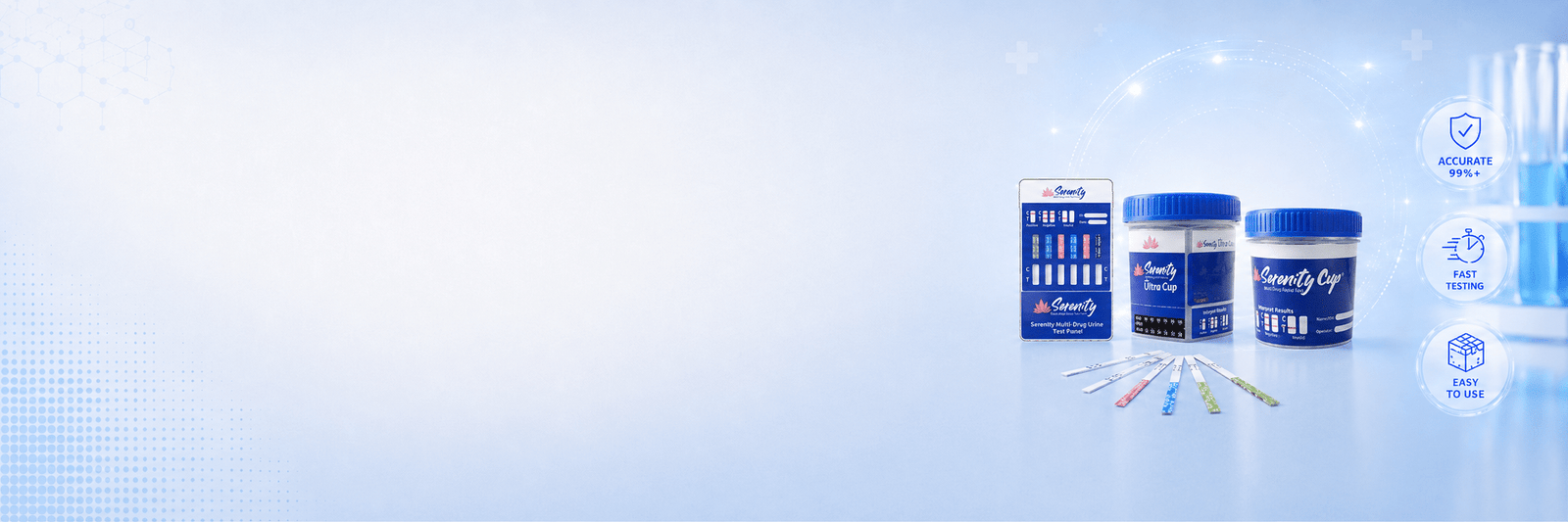
DrugTestingCup.com supplies rapid drug-screening products for organizations operating non-DOT workplace and institutional testing programs.
Available options include:
- 5-panel drug test cups
- Multi-panel drug test cups
- Oral swab drug tests
- Expanded-panel urine screening products
- Workplace screening supplies
These products can be useful for organizations such as:
- Employers
- Staffing agencies
- Rehabilitation programs
- Sober living facilities
- Clinics
- Treatment providers
- Correctional programs
- Occupational testing programs
However, organizations must distinguish between a rapid non-DOT screening product and an official federally regulated DOT drug test.
A rapid test cup should never be marketed or used as a substitute for the Part 40 laboratory testing process.
Employers needing both regulated and non-regulated testing should maintain separate procedures for each program.
Frequently Asked Questions About DOT Drug Testing
What is a DOT drug test?
A DOT drug test is a federally regulated drug test required for certain employees performing safety-sensitive transportation duties. The testing process is governed primarily by 49 CFR Part 40 together with applicable DOT agency regulations.
What drugs are tested on a DOT drug test?
The current DOT drug-testing program covers marijuana metabolites, cocaine metabolites, amphetamines, opioids and phencyclidine (PCP).
Is a DOT drug test a 5-panel test?
Yes. It is commonly described as a 5-panel test because it covers five drug classes. However, multiple individual drugs and metabolites are included within some of those classes.
What does a DOT drug test consist of?
A DOT drug test includes regulated specimen collection, federal chain-of-custody documentation, testing by an appropriate HHS-certified laboratory, initial and confirmatory testing procedures, and MRO review when required.
What are the DOT drug test cutoff levels?
DOT establishes specific initial and confirmation cutoff levels. For example, the current urine initial cutoff for marijuana metabolite is 50 ng/mL, with a 15 ng/mL confirmation cutoff. Cocaine metabolite uses a 150 ng/mL initial cutoff and 100 ng/mL confirmation cutoff.
Is fentanyl included in the DOT drug test in 2026?
No. DOT proposed adding fentanyl and norfentanyl, but the current DOT drug-testing panel has not yet been changed to require them.
Is a DOT drug test urine or saliva?
Both specimen types are authorized in the regulation, but urine is currently the operational specimen. DOT oral-fluid testing cannot begin until at least two HHS-certified oral-fluid laboratories are available. DOT currently lists none.
Can an instant drug test cup be used for an official DOT drug test?
No. DOT specifically states that point-of-collection urine testing and instant drug tests are not authorized for DOT drug testing.
Can an employer test a DOT specimen for additional drugs?
No. DOT specimens cannot be tested for unauthorized additional drugs. A separate non-DOT testing program must be used where appropriate.
Does DOT use hair drug testing?
No. Hair testing is not currently an authorized DOT Part 40 testing methodology.
Does DOT test for alcohol?
Yes, but alcohol testing is separate from the five-panel drug test and follows different procedures.
Does DOT test for marijuana?
Yes. Marijuana metabolites remain part of the federally regulated DOT drug-testing panel.
Can CBD cause problems with a DOT drug test?
Potentially. DOT rules do not allow hemp or non-prescription marijuana-product use to be accepted by an MRO as the basis for verifying a marijuana test negative.
Can prescription medication affect a DOT drug test?
Yes. Certain medications can produce laboratory findings involving drugs in the DOT panel. The MRO evaluates whether a legitimate medical explanation exists where the regulations permit one.
What happens after a positive DOT drug test?
Following a verified positive result, the employee must be removed from safety-sensitive DOT duties and complete the applicable SAP and return-to-duty process before returning to covered work.
How often does DOT require random drug testing?
The minimum annual random testing percentage depends on the DOT agency. For example, the 2026 FMCSA minimum random drug-testing rate is 50%, while the FAA rate is 25%.
How long does a DOT drug test take?
There is no single guaranteed turnaround time. Laboratory processing, confirmation testing, specimen issues and MRO review can affect how quickly the final result is reported.
Are DOT and non-DOT drug tests the same?
No. DOT tests follow federal Part 40 requirements. Non-DOT tests follow employer policy and applicable laws and may use different panels, specimen types and rapid testing methods.
DOT Drug Testing: Key Takeaways for 2026
A DOT drug test is much more than a five-panel test cup.
The key points employers and employees should understand are:
- DOT currently requires testing for five drug classes.
- Multiple individual drugs and metabolites fall within those five classes.
- DOT establishes specific initial and confirmation cutoff concentrations.
- Point-of-collection and instant drug tests are not authorized as official DOT tests.
- DOT specimens are tested through HHS-certified laboratories.
- DOT and non-DOT testing programs must remain separate.
- Urine remains the currently operational DOT drug-testing specimen.
- Oral-fluid testing is authorized but cannot yet be implemented because the required HHS-certified laboratories are not available.
- Fentanyl and norfentanyl have been proposed for addition to the DOT panel but are not currently required.
- Important Part 40 procedural changes became effective June 10, 2026.
- Updated urine collection guidance was issued June 30, 2026.
- A revised Federal CCF was announced in July 2026.
- Random drug-testing percentages vary by DOT agency.
- Employers should monitor federal guidance instead of relying on outdated testing articles.
For broader employer guidance, read our Drug Testing Compliance & Regulation Guide and Complete 2026 Guide to Workplace Drug Testing.
For official rules and updates, consult the U.S. Department of Transportation Office of Drug and Alcohol Policy and Compliance.
Compliance Notice: This article is provided for general educational purposes and is not legal advice. DOT rules, agency requirements, forms and testing procedures can change. Employers should review current federal regulations and consult qualified compliance or legal professionals when administering a regulated drug and alcohol testing program.