Does CBD Show Up on a Drug Test? What Employers and Users Should Know

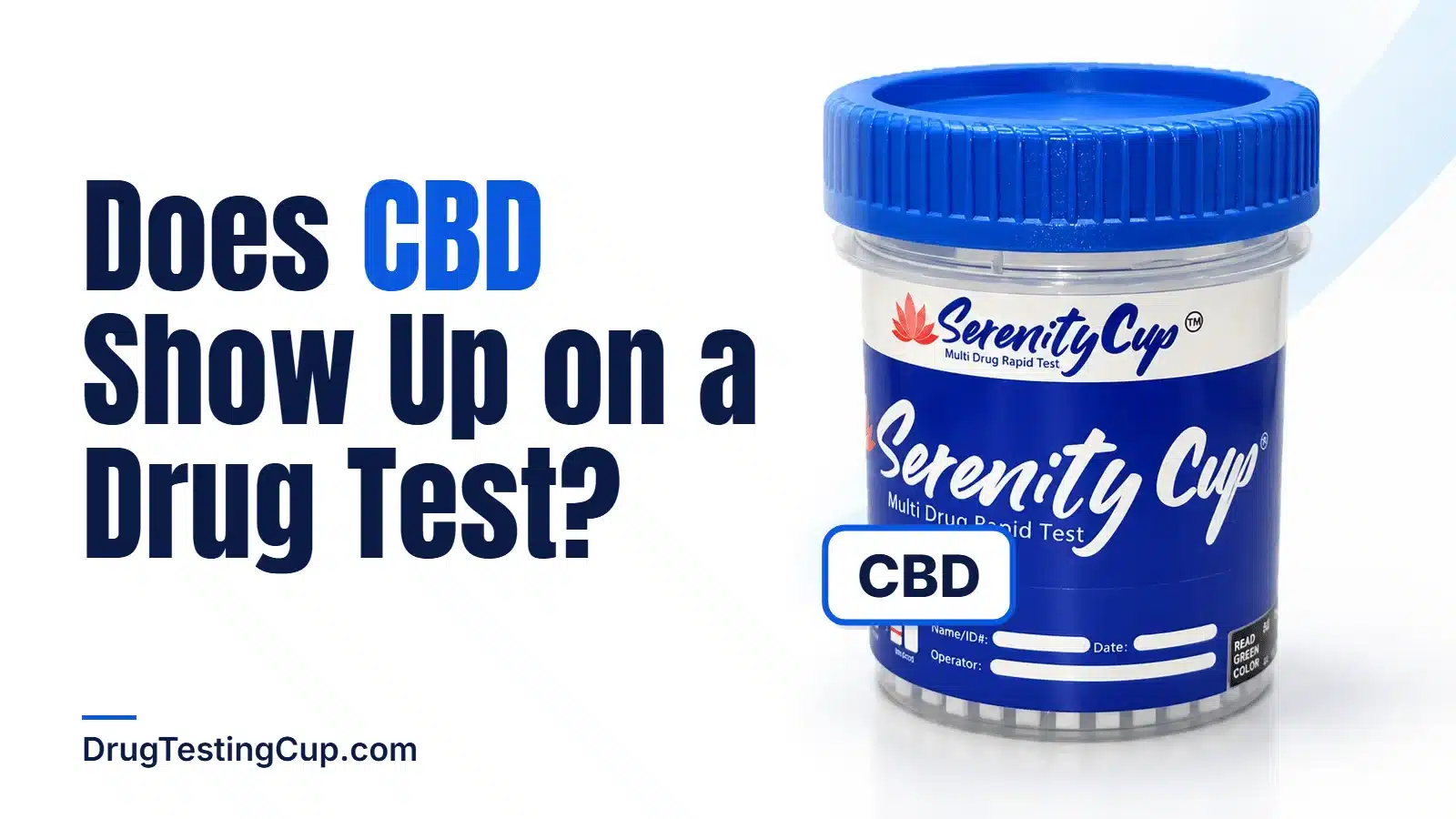
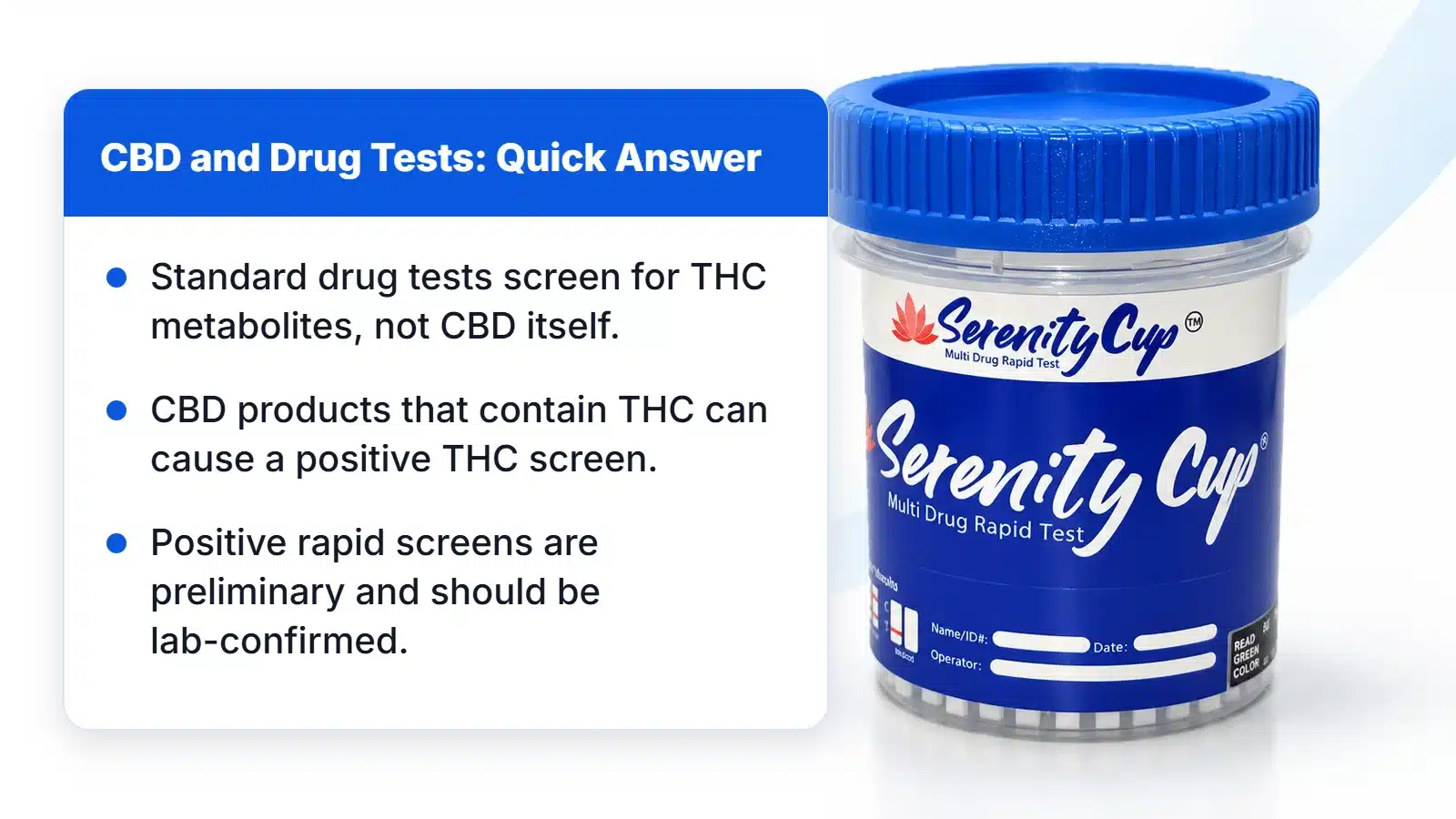
Does CBD show up on a drug test? In most cases, no. Standard workplace and clinical drug tests are designed to detect THC, the psychoactive compound in marijuana, not cannabidiol (CBD). The catch is that many CBD products contain small amounts of THC, and some contain more than their labels say. That THC is what can turn a routine screen into a positive result.
This guide explains what a THC drug test actually measures, why CBD users sometimes test positive, how different CBD product types compare, and what employers and testing programs should consider when a donor reports CBD use.
What Drug Tests Look For: THC, Not CBD
A marijuana drug test screens for THC metabolites, mainly THC-COOH, which the body produces after THC is used. Urine drug test cups and dip cards use an immunoassay strip labeled THC that reacts to these metabolites above a set cutoff level. The most common urine screening cutoff is 50 ng/mL, the same initial cutoff used in federal workplace testing, with laboratory confirmation commonly set at 15 ng/mL.
CBD and THC are different molecules. A standard THC strip is not designed to detect CBD, and a typical 5, 10 or 12 panel test does not include a CBD panel. Specialized laboratory tests can measure CBD, but they are not part of routine employment, probation or treatment screening.
For more on how long THC metabolites remain detectable, see our guide on how long THC stays in urine.
Why CBD Users Can Test Positive for THC
When a CBD user fails a drug test, the cause is almost always THC in the product rather than CBD itself. There are three common reasons this happens.
Full-spectrum products contain THC
Hemp-derived products can legally contain up to 0.3% delta-9 THC by dry weight under federal law. That amount is small per serving, but daily or high-dose use can allow THC metabolites to build up to a detectable level, especially with oils, gummies or capsules taken several times a day.
Labels are not always accurate
The CBD market has limited oversight, and product testing has repeatedly found labeling problems. A 2017 study in JAMA that analyzed 84 CBD products sold online found THC in roughly one in five of them, and many products contained more or less CBD than labeled. A product sold as THC-free may still contain enough THC to matter.
Cross-contamination and product drift
THC can enter a product through shared processing equipment or extraction batches that vary from lot to lot. Two bottles of the same brand can produce different results.
CBD Product Types and THC Risk
Not every CBD product carries the same risk. The table below summarizes the three main product types.
| Product Type | What It Contains | THC Drug Test Risk |
|---|---|---|
| Full-spectrum CBD | CBD plus other cannabis compounds, including up to 0.3% delta-9 THC | Highest, especially with frequent or high-dose use |
| Broad-spectrum CBD | CBD and other compounds with THC reduced or removed | Lower, but trace THC may remain |
| CBD isolate | Purified CBD only | Lowest, if the product is accurately labeled and tested |
Even with isolate products, a third-party certificate of analysis (COA) for the specific batch is the best way to confirm that THC is below the limit of detection.
Can CBD Turn Into THC in the Body?
This question comes up often. Laboratory experiments have shown that CBD can convert to THC-like compounds under acidic conditions, but studies in people have not shown meaningful conversion after normal oral use. In practice, a positive THC result in a CBD user is best explained by THC in the product, not by the body converting CBD.
Does CBD Test Positive for THC on a Rapid Test Cup?
Pure CBD should not trigger the THC strip on a rapid test cup. Products that contain THC can. A rapid cup produces a preliminary result, so a THC non-negative screen should be confirmed by a laboratory method such as GC-MS or LC-MS/MS. Confirmation identifies THC-COOH specifically and reports a quantitative level, which helps separate true THC exposure from a screening issue.
Rapid test results are read by looking at the test line for each panel. Our guide on how to read a drug test cup explains how to interpret lines, including faint lines, correctly.
Can a Drug Test Detect CBD Specifically?
Yes, but only when a laboratory runs a test designed for CBD. Some research, clinical and forensic laboratories can measure CBD and its metabolites in blood, urine or oral fluid. These tests are not part of standard workplace panels, and most employers have no reason to order them because CBD is not considered impairing in the way THC is.
CBD and DOT Drug Testing
For safety-sensitive transportation employees, CBD carries specific risk. The U.S. Department of Transportation’s CBD notice states that CBD use is not a legitimate medical explanation for a laboratory-confirmed marijuana positive. A Medical Review Officer will verify a confirmed THC result as positive even if the employee says it came from CBD.
Non-DOT employers set their own policies, but many follow the same approach: a confirmed THC result is treated as a THC result regardless of the source.
What Affects Whether CBD Use Leads to a Positive Result?
- THC content per serving: Higher THC content increases risk.
- Dose and frequency: Daily or multiple daily doses allow metabolites to accumulate.
- Product type: Full-spectrum products carry more risk than verified isolates.
- Body fat and metabolism: THC is fat-soluble and clears at different rates between individuals.
- Test cutoff: A lower cutoff detects smaller amounts of THC metabolites.
Guidance for Employers and Testing Programs
Employers and program administrators can reduce disputes by addressing CBD directly in their written policy. A clear policy states that the program tests for THC, that CBD products may contain THC, and that a confirmed THC result will be handled the same way regardless of the claimed source.
For on-site screening, a multi-panel cup that includes THC is the standard option. Programs that need broader coverage can compare configurations in our 12 panel drug test cups category, and programs that test only for marijuana can use a single panel drug test.
If a result is disputed, laboratory confirmation is the appropriate next step. For a broader overview of what else can cause unexpected results, read what can cause a false positive drug test.
Guidance for CBD Users Who Are Tested
- Choose products with a current, batch-specific COA from an independent lab.
- Prefer CBD isolate or verified THC-free products if you are subject to testing.
- Understand that a label claim alone does not guarantee a THC-free product.
- If you are in a DOT-regulated position, know that CBD will not be accepted as an explanation for a confirmed positive.
CBD, Hemp-Derived THC and Other Cannabinoid Products
The hemp market now includes many products that are sold alongside CBD but contain intoxicating cannabinoids, such as delta-8 THC, THC-O and high-THCA hemp flower. These products are a much bigger drug-test risk than CBD. Delta-8 THC and similar compounds are processed by the body into metabolites that a standard THC immunoassay can detect, and THCA converts to delta-9 THC when heated or smoked.
Some products marketed as CBD also blend in these cannabinoids. Anyone subject to testing should read the full ingredient list and lab report rather than relying on the front label. For employers, the practical point is the same: the THC panel responds to THC metabolites, whatever product they came from.
How Long Could THC From a CBD Product Stay Detectable?
If a CBD product contains THC, the detection window follows the same pattern as other THC exposure. Occasional exposure to small amounts may clear within a few days, while daily use can extend urine detection for a week or longer because THC is stored in fat and released gradually. The exact window depends on how much THC the product delivers, how often it is used and the cutoff level of the test.
How to Read a CBD Certificate of Analysis
A certificate of analysis is the lab report that shows what a specific batch contains. When reviewing one, check that the batch or lot number matches the product in hand, that the testing lab is independent from the brand, and that the report lists delta-9 THC along with other THC forms such as THCA and delta-8 THC. A result reported as “ND” means not detected at the lab’s limit of detection. Reports that are missing, outdated or for a different batch do not tell you what is in the bottle you are using.
Key Takeaway
Standard drug tests do not look for CBD, but they do look for THC, and many CBD products contain it. Full-spectrum products, inaccurate labels and frequent use all raise the chance of a positive THC screen. Rapid test results are preliminary, and a laboratory confirmation is the right way to resolve a disputed result.
This article is for general educational purposes and is not medical or legal advice.
Frequently Asked Questions
Does CBD show up on a drug test?
Standard drug tests do not screen for CBD. They screen for THC metabolites. CBD products that contain THC can cause a positive THC result.
Does CBD test positive for THC?
Pure CBD should not test positive for THC. Full-spectrum or mislabeled products that contain THC can produce a positive THC screen, especially with frequent use.
Can a drug test detect CBD?
Only a laboratory test designed to measure CBD can detect it. Standard 5, 10 and 12 panel drug tests do not include a CBD panel.
Is CBD isolate safe for drug testing?
CBD isolate carries the lowest risk if it is accurately labeled. A batch-specific certificate of analysis is the best way to confirm THC is not present.
Can I use CBD as an explanation for a DOT positive?
No. DOT guidance states that CBD use is not a legitimate medical explanation for a laboratory-confirmed marijuana positive.
IN THIS ARTICLE