

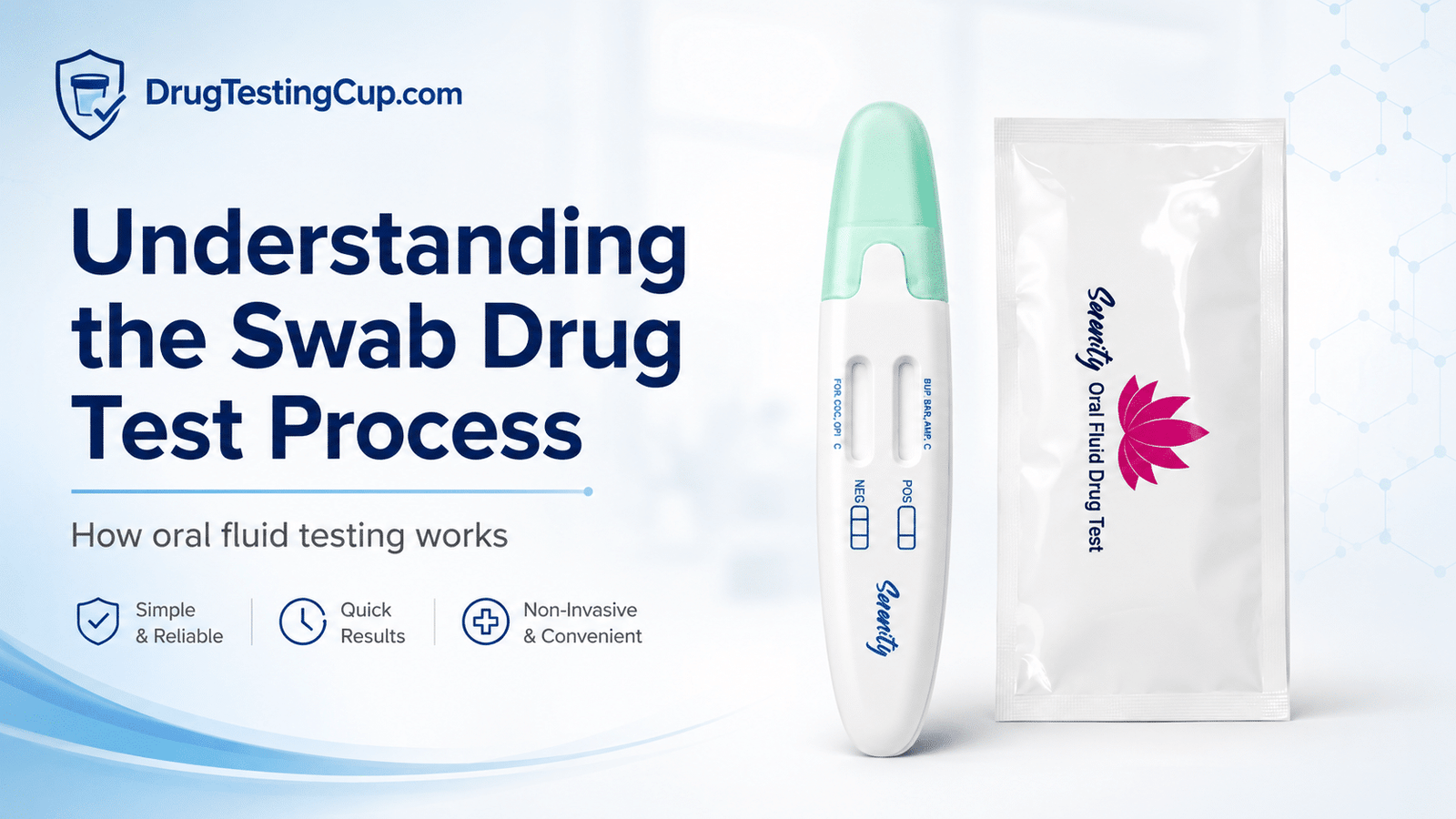

Understanding the Swab Drug Test Process
A swab drug test is a fast and convenient method of screening for recent drug exposure using oral fluid collected from inside the mouth. You may also hear this type of screening called a mouth swab drug test, saliva drug test, oral fluid drug test, spit drug test, or cheek swab drug test.
Unlike urine testing, oral fluid testing does not require collecting a urine specimen or using a private restroom. Instead, a collection device is placed inside the mouth to obtain a saliva sample.
This straightforward collection process is one reason oral fluid testing is used by employers, staffing agencies, treatment programs, rehabilitation facilities, correctional programs, healthcare organizations, and other professional testing programs.
If you are comparing testing methods, you can also browse our complete selection of mouth swab drug tests and oral fluid testing kits.
People searching for information about saliva testing frequently ask questions such as how to pass oral swab test for drugs, how to pass a swab drug test for pot, or how to pass a saliva test for THC. However, there is no dependable technique that guarantees a negative result on a properly administered drug test. This guide focuses instead on explaining how mouth swab testing works, what these tests screen for, and how they compare with urine drug testing.
What Is a Swab Drug Test?
A swab drug test analyzes oral fluid collected from inside a person’s mouth.
Depending on the collection device, a swab may collect saliva from the cheek, gums, tongue, or another area specified by the manufacturer.
Once enough oral fluid has been collected, the specimen is introduced into or processed by the testing device. The test screens the specimen for the substances included in that particular panel.
Some devices test for only one substance, while multi-panel oral fluid tests can screen for several drug classes with a single collection.
For example, organizations that need broader screening can review a 7 panel oral swab saliva drug test that includes multiple drug panels in one oral-fluid device.
How Does a Swab Drug Test Work?
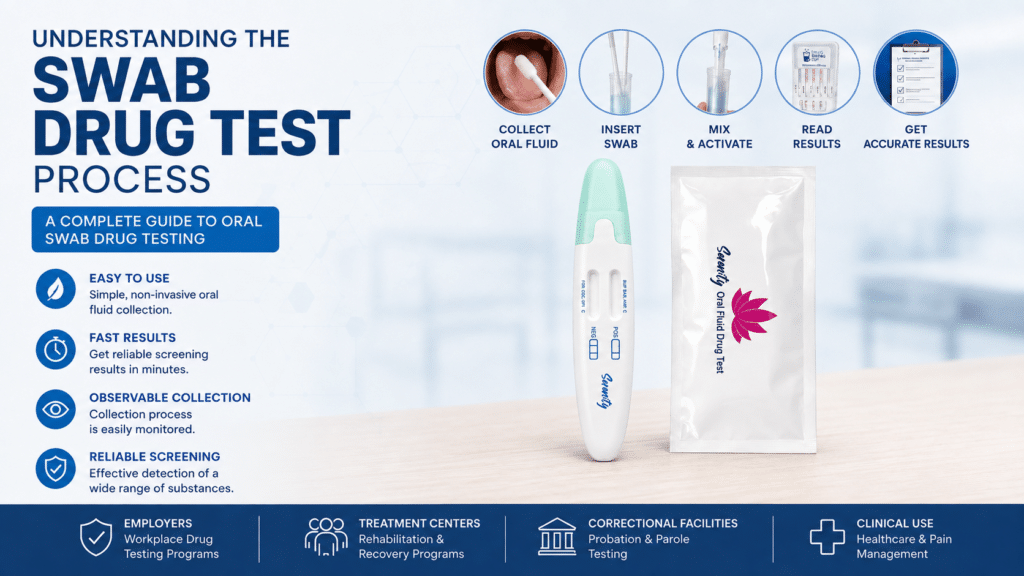
The exact procedure depends on the manufacturer and testing device, but the overall swab drug test process is relatively simple.
First, the test administrator prepares the collection device according to the manufacturer’s instructions.
The oral-fluid collector is then placed inside the mouth until an adequate saliva sample has been obtained.
After collection, the swab is inserted into or connected with the testing device. The test reacts with the specimen and produces preliminary screening results according to the device’s specified development period.
Testing administrators should always follow the instructions supplied with the device because collection procedures, result indicators, cutoff levels, and interpretation times can vary between products.
The FDA’s information about drugs-of-abuse tests provides additional information about different drug-testing methodologies, including tests designed for oral-fluid specimens.
What Can a Mouth Swab Drug Test Detect?
The substances detected depend entirely on the configuration of the test.
Different oral fluid drug tests may include screening panels for substances or drug classes such as:
-
THC / marijuana
-
Cocaine
-
Amphetamines
-
Methamphetamine
-
Opiates
-
Methadone
-
PCP
-
Buprenorphine
-
Fentanyl
-
K2 / synthetic cannabinoids
-
Alcohol
-
Other targeted substances
A mouth swab drug test should therefore not be selected based only on the number of panels.
Organizations should check exactly which analytes are included and review the cutoff levels for the individual product before ordering.
For a broader overview of specimen types and multi-panel screening, see our complete guide to drug testing.
Mouth Swab Drug Test THC Screening
THC is one of the most commonly searched substances associated with saliva testing.
A mouth swab drug test THC configuration is designed to screen an oral-fluid specimen for THC according to the cutoff and specifications of that particular testing device.
You may also see this described as a swab drug test THC, marijuana saliva test, THC oral fluid test, or THC mouth swab test.
One important distinction is that saliva testing and urine testing are not identical.
Oral fluid testing is commonly used when a testing program is interested in relatively recent exposure, while urine testing evaluates a different specimen and may detect drug metabolites over a different period.
This difference explains why someone researching THC testing may encounter both urine and oral-fluid testing options.
 How Long Can Drugs Be Detected in Saliva?
 How Long Can Drugs Be Detected in Saliva?
There is no single detection period that applies to every drug, test, or person.
Drug detection can be influenced by factors such as:
-
Substance being tested
-
Testing methodology
-
Cutoff concentration
-
Frequency of exposure
-
Amount involved
-
Individual metabolism
-
Specimen characteristics
-
Collection method
-
Sensitivity of the test
For this reason, detection periods should be treated as general educational estimates rather than guaranteed timelines.
They should also not be used to determine whether a person will or will not receive a particular test result.
If you are researching detection periods for professional testing purposes, visit our drug detection information and testing resources.
How Long Do Drugs Stay in Pee Compared With Saliva?
The question “how long do drugs stay in pee” is closely related to searches about saliva testing.
Urine and oral fluid are different specimen types, so their detection characteristics are also different.
Urine testing frequently looks for drug metabolites that are eliminated through the body after drug exposure. Oral-fluid testing analyzes saliva and is generally associated with more recent exposure.
However, no universal detection period applies to every substance.
Testing results can vary according to the particular drug, testing device, cutoff level, specimen type, and individual biological factors.
For a more detailed explanation of urine screening, read our guide to urine drug test detection windows.
Spit Drug Test vs. Urine Drug Test
A spit drug test and a urine drug test can both be useful, but each testing method has different practical characteristics.
Oral Fluid Drug Testing
Potential advantages include:
-
Simple specimen collection
-
Directly observable collection
-
No restroom required
-
Convenient on-site screening
-
Multiple panel configurations
-
Useful when recent exposure is relevant
Urine Drug Testing
Potential advantages include:
-
Broad selection of panel configurations
-
Established use in many testing programs
-
Availability of rapid multi-panel cups
-
Different detection characteristics than oral fluid
-
Wide selection of screening products
The appropriate method depends on the purpose of the testing program, substances being screened, collection environment, organizational policies, and applicable regulations.
Organizations comparing specimen types can also browse our selection of drug test cups for urine-based testing.
Why Employers Use Mouth Swab Drug Tests
Oral-fluid testing can be particularly useful when an organization needs a collection process that can be directly observed.
Potential applications include:
-
Pre-employment screening
-
Workplace testing programs
-
Staffing agency screening
-
Treatment and rehabilitation programs
-
Sober living programs
-
Correctional programs
-
Mobile testing services
-
Clinical and institutional screening
Employers should not assume that one testing procedure is appropriate everywhere.
Workplace drug-testing requirements can vary according to federal regulations, state law, local requirements, industry, and the circumstances surrounding the test.
Employers implementing a testing program should review our Drug Testing Laws by State guide and consult applicable official requirements.
For federal workplace drug-testing information, the SAMHSA Workplace Drug Testing Resources page provides official guidance and resources.
What Is a Cheek Swab Drug Test?
A cheek swab drug test is another term commonly used to describe oral-fluid drug testing.
The collection device may be positioned against the inside of the cheek, gums, tongue, or another location depending on the product instructions.
The goal is to collect a sufficient oral-fluid specimen for screening.
Although collection is straightforward, administrators still need to follow the manufacturer’s directions carefully.
An inadequate specimen, incorrect collection procedure, or improperly interpreted test can affect the usefulness of the screening result.
How Long Does a Swab Drug Test Take?
One reason organizations use oral-fluid screening is its relatively straightforward collection process.
Once an adequate saliva specimen is collected, a rapid test is processed according to the development and reading time specified by the manufacturer.
Different products can have different interpretation windows.
Testing administrators should therefore avoid reading a test earlier or later than the manufacturer specifies.
When laboratory confirmation is required, additional time is necessary for specimen transportation, processing, analysis, and reporting.
Preliminary Results vs. Confirmed Results
A rapid swab drug test is generally used as an initial screening tool.
A preliminary non-negative result should not automatically be treated the same as a laboratory-confirmed result.
Depending on the testing program and applicable requirements, additional laboratory testing may be appropriate before significant employment, treatment, legal, or administrative decisions are made.
The FDA explains that drug-testing programs can involve an initial screening process followed by additional testing when necessary.
Testing organizations should establish clear procedures covering collection, documentation, interpretation, confirmation, confidentiality, and reporting.
How to Pass an Oral Swab Test for Drugs?
Searches for how to pass oral swab test for drugs are common, but online information about supposedly defeating saliva tests can be misleading.
There is no dependable mouthwash, food, drink, brushing method, or other shortcut that guarantees a negative result on a properly administered drug screening.
The same applies to searches for how to pass a swab drug test for pot or how to pass a saliva test for THC.
Rather than relying on claims about manipulating a test, individuals and organizations should understand that results depend on the substance being tested, test methodology, cutoff level, specimen characteristics, and other factors.
If a person believes a prescription medication or legitimate medical issue could affect a test result, the appropriate approach is to follow the testing organization’s review and confirmation process.
Choosing the Right Oral Fluid Drug Test
When purchasing oral-fluid tests for an organization, start with the substances that need to be screened.
A smaller-panel test may be appropriate when only a few specific substances are relevant.
A larger multi-panel test may be more practical when a program needs broader screening from a single saliva sample.
Before ordering, compare:
-
Drug panels included
-
Individual cutoff levels
-
Collection method
-
Specimen requirements
-
Reading time
-
Intended use
-
Package quantity
-
Testing environment
-
Manufacturer instructions
You can compare mouth swab drug test configurations to select the panel combination that best matches your testing program.
Frequently Asked Questions About Swab Drug Tests
What is a swab drug test?
A swab drug test uses oral fluid collected from inside the mouth to screen for selected drugs or drug classes. It is also commonly called a saliva drug test, mouth swab drug test, oral fluid drug test, or spit drug test.
Is a cheek swab drug test the same as a saliva drug test?
Generally, yes. A cheek swab test collects oral fluid from inside the mouth for drug screening. The exact collection location and procedure depend on the device.
Can a mouth swab drug test detect THC?
Yes, when THC is included in the test configuration. Always check the product specifications because not every oral-fluid test includes THC.
What drugs can a swab drug test detect?
Depending on the device, oral-fluid tests may screen for THC, cocaine, amphetamines, methamphetamine, opiates, PCP, methadone, fentanyl, alcohol, K2, and other substances.
Is a spit drug test the same as a mouth swab test?
The terms are commonly used interchangeably. Both generally describe drug screening using an oral-fluid specimen collected from inside the mouth.
How long do drugs stay in pee?
There is no single urine detection period for every drug or individual. Detection characteristics vary based on the substance, specimen, cutoff level, testing methodology, and other factors.
How do you pass an oral swab drug test?
There is no reliable technique that guarantees a negative result on a properly administered test. Claims about guaranteed methods for defeating a saliva test should be treated cautiously.
Understanding the Swab Drug Test Process
A swab drug test provides organizations with a convenient way to collect an oral-fluid specimen and screen for selected substances.
Whether it is described as a mouth swab drug test, spit drug test, cheek swab drug test, or saliva drug test, the basic process involves collecting oral fluid and screening the specimen according to the specifications of the testing device.
Different products can test for THC, cocaine, amphetamines, opioids, fentanyl, alcohol, K2, and other substances depending on their panel configuration.
Understanding the test’s purpose, collection process, cutoff levels, limitations, and confirmation requirements is more useful than relying on claims about ways to manipulate results.
Organizations can shop mouth swab drug tests and oral fluid testing kits and compare individual panel configurations before choosing a testing product.
IN THIS ARTICLE