

Does THCA Show Up on a Drug Test? THCA Flower and THC Testing

Does THCA show up on a drug test? In practical terms, yes. THCA (tetrahydrocannabinolic acid) is the natural precursor to THC found in raw cannabis. When THCA is heated by smoking, vaping or cooking, it converts into delta-9 THC, the compound that causes a high. The body then processes that THC into the same metabolites a standard marijuana drug test is designed to detect.
THCA hemp flower and concentrates are sold as hemp products in many places, which leads some people to assume they will not affect a drug test. This guide explains how THCA works, why it causes positive THC results, how long it remains detectable and what employers and testing programs should know.
What Is THCA?
THCA is the acidic form of THC that cannabis plants produce. In fresh or dried cannabis that has not been heated, most of the potential THC exists as THCA. THCA itself is not considered intoxicating in its raw form. The change happens through a process called decarboxylation, in which heat removes part of the THCA molecule and turns it into delta-9 THC.
This is the same chemistry that makes ordinary marijuana psychoactive when it is smoked. Most of the THC in a joint was THCA before it was lit.
Why THCA Hemp Products Exist
Federal hemp rules have historically focused on the delta-9 THC concentration of the plant. Some products have been sold as hemp because their delta-9 THC level was low before heating, even though their THCA content was high. Once these products are smoked or vaped, the THCA becomes THC, and the effect is similar to marijuana. Federal and state rules for these products have been changing, so availability, labeling and legal status vary by location.
For drug testing purposes, the legal label of the product does not matter. What matters is whether the body has processed THC.
How a THC Drug Test Detects THCA Use
Standard urine drug tests screen for THC-COOH, a metabolite produced when the body processes delta-9 THC. Rapid test cups and dip cards use a THC panel, most commonly with a 50 ng/mL screening cutoff, and laboratory confirmation commonly uses 15 ng/mL.
When someone smokes or vapes THCA flower, the THCA has already been converted to THC before it is inhaled. The body processes that THC exactly as it would THC from marijuana. A drug test cannot tell whether THC-COOH came from THCA hemp, marijuana, delta-9 edibles or another source.
For more detail on THC detection windows, see our guide on how long THC stays in urine.
Does Raw or Unheated THCA Show Up on a Drug Test?
Unheated THCA, such as in raw cannabis juice or certain tinctures, is a less clear-cut case. THCA is not THC, and less research exists on how unheated THCA is processed in the body. However, there are several reasons unheated products still carry risk:
- THCA products often contain some delta-9 THC already, because partial conversion happens during drying, curing, storage and processing.
- Exposure to warmth or light over time can convert more THCA to THC in the product.
- Labels may not accurately reflect the THC and THCA content.
Anyone subject to drug testing should assume that any THCA product may lead to a positive THC result.
THCA vs THC vs CBD on a Drug Test
| Compound | Intoxicating? | Drug Test Risk |
|---|---|---|
| Delta-9 THC | Yes | High; directly produces THC-COOH |
| THCA (smoked, vaped or baked) | Yes, after conversion to THC | High; converts to delta-9 THC |
| THCA (raw, unheated) | Generally no | Possible, because products often contain THC |
| Delta-8 THC | Yes | High; metabolites react with THC immunoassays |
| CBD | No | Low for pure CBD; higher for products containing THC |
Learn more about CBD in our article on whether CBD shows up on a drug test.
How Long Does THCA Stay in Your System?
Because smoked or vaped THCA becomes THC, the detection window follows the same pattern as marijuana use:
| Use Pattern | Commonly Cited Urine Detection Window |
|---|---|
| Single or occasional use | About 1–3 days |
| Moderate use (several times a week) | About 5–7 days |
| Daily use | About 10–15 days |
| Heavy, long-term daily use | 30 days or longer |
THC is stored in body fat and released slowly, which is why frequent users can test positive long after their last use. Oral fluid tests usually detect THC for a shorter period, often up to about 24 to 72 hours, and hair tests can show use over about 90 days.
Factors That Affect a THCA Drug Test Result
- Potency: High-THCA flower and concentrates deliver large amounts of THC when heated.
- Frequency: Repeated use leads to accumulation in fat tissue.
- Method of use: Smoking, vaping and dabbing convert most THCA to THC; raw use converts less.
- Body composition and metabolism: These affect how quickly THC is released and cleared.
- Test type and cutoff: Lower cutoffs and longer-window specimens detect use for longer.
Can You Claim THCA Is Legal Hemp After a Positive Test?
In workplace and regulated testing, the source of THC generally does not change how a confirmed THC result is handled. For DOT-regulated employees, federal guidance makes clear that hemp and CBD products are not acceptable explanations for a confirmed marijuana positive, and THCA hemp falls into the same practical category. Non-DOT employers set their own policies, but many treat any confirmed THC result the same way regardless of the product used.
State laws on marijuana and hemp use, including off-duty use protections in some states, can affect what employers may do with a THC result. Employers should review the drug testing laws in their state and consult legal counsel when setting policy.
THCA Concentrates, Vapes and Edibles
THCA is sold in several forms beyond flower. THCA diamonds and other concentrates are extremely potent and are usually dabbed or vaped, which converts nearly all of the THCA to THC at once. THCA vape cartridges work the same way. Edibles labeled as THCA are typically made with ingredients that were heated during production, which means much of the THCA may already have become THC. All of these forms carry a high risk of a positive THC test, and concentrates in particular can produce strong, long-lasting results in frequent users.
Oral Fluid Testing and THCA
Oral fluid drug tests detect parent THC in the mouth rather than a metabolite in urine. Smoking or vaping THCA leaves THC residue in the mouth, so a saliva test can detect recent use, usually within the past day or so. Because oral fluid devices focus on recent use, some employers prefer them for post-accident and reasonable suspicion testing. Learn more about how mouth swab and urine tests compare.
What Testing Staff Should Know
Collectors are likely to hear donors mention THCA, hemp or CBD products at the time of collection. Staff should record any statements factually, complete the collection according to instructions, and avoid giving opinions about whether the product will affect the result. Interpreting results belongs to the confirmation and review process set out in the program’s policy.
Guidance for Employers and Testing Programs
THCA products have made it more common for donors to say they only used a “legal hemp” product. A clear written policy helps avoid disputes. It should state that the program tests for THC metabolites, that hemp-derived products including THCA, delta-8 and full-spectrum CBD may produce THC metabolites, and that confirmed results will be handled under the policy regardless of the product’s legal status.
For on-site screening, any multi-panel cup with a THC panel will respond to THC produced from THCA. Programs focused only on cannabis can use a single panel drug test, while broader programs can compare options in our drug test cups category. Non-negative results should be confirmed by a laboratory.
Key Takeaway
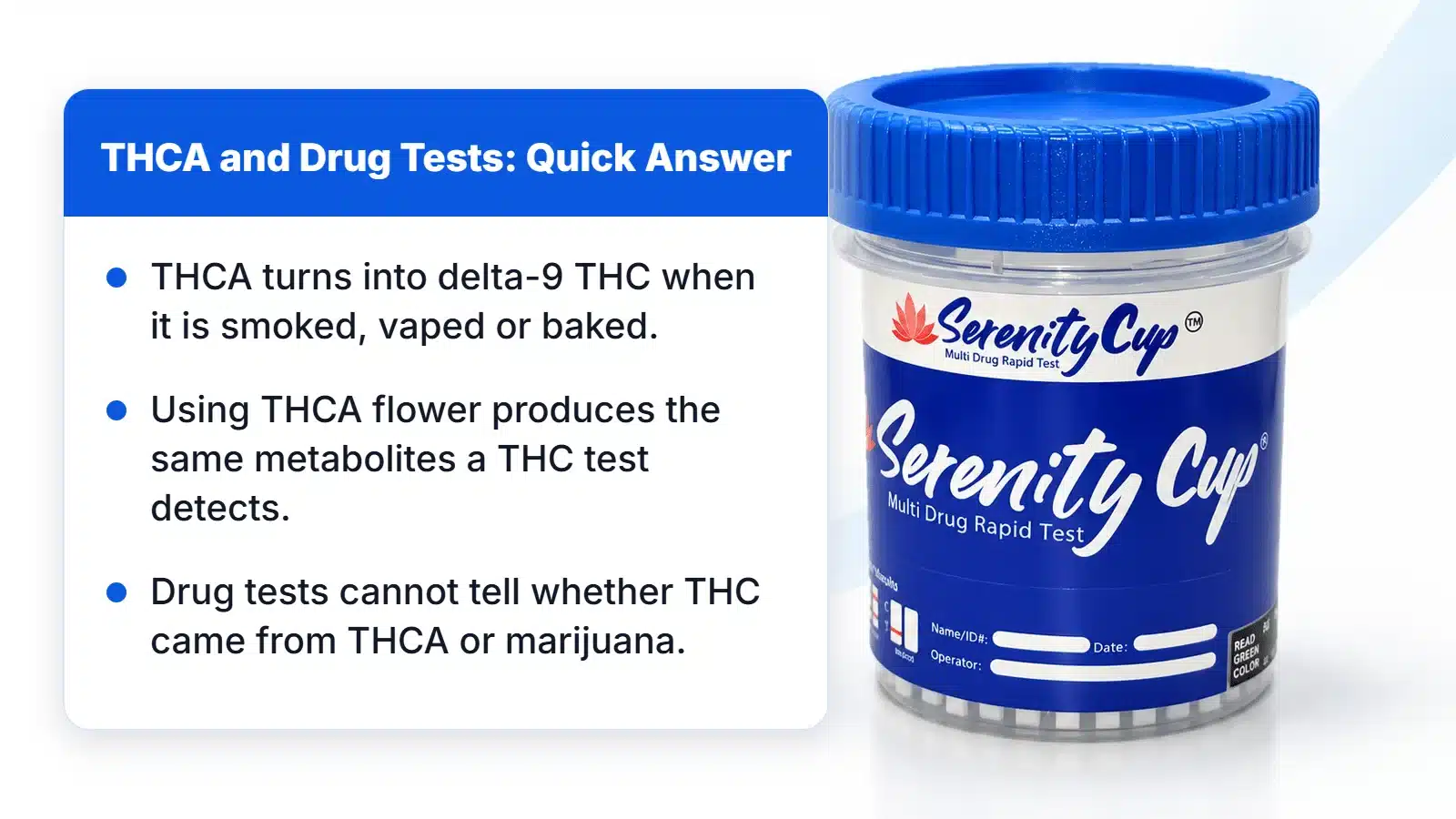
THCA turns into delta-9 THC when it is heated, so smoking, vaping or baking THCA flower produces the same metabolites a THC drug test detects. Drug tests cannot distinguish THC from THCA hemp and THC from marijuana. Even unheated THCA products carry risk because they often contain THC. Anyone subject to testing should treat THCA products the same as marijuana.
This article is for general educational purposes and is not medical or legal advice.
Frequently Asked Questions
Does THCA show up on a drug test?
Yes, in practice. When THCA is smoked, vaped or baked it converts to delta-9 THC, which the body processes into the THC-COOH metabolite that drug tests detect.
Can a drug test tell the difference between THCA and marijuana?
No. Standard and confirmatory THC tests detect THC metabolites and cannot identify whether the THC came from THCA hemp or marijuana.
Will raw THCA show up on a drug test?
It may. Raw THCA products often contain some delta-9 THC, and conversion can occur during processing and storage, so they still carry a risk of a positive THC result.
How long does THCA stay in your system?
Smoked or vaped THCA follows THC detection windows: about 1 to 3 days for occasional use and potentially 30 days or more for heavy daily use in urine.
Is THCA an acceptable explanation for a positive DOT test?
No. Hemp-derived products are not accepted as an explanation for a confirmed marijuana positive in DOT-regulated testing.
IN THIS ARTICLE